What Is a Serial Silo in SEO?
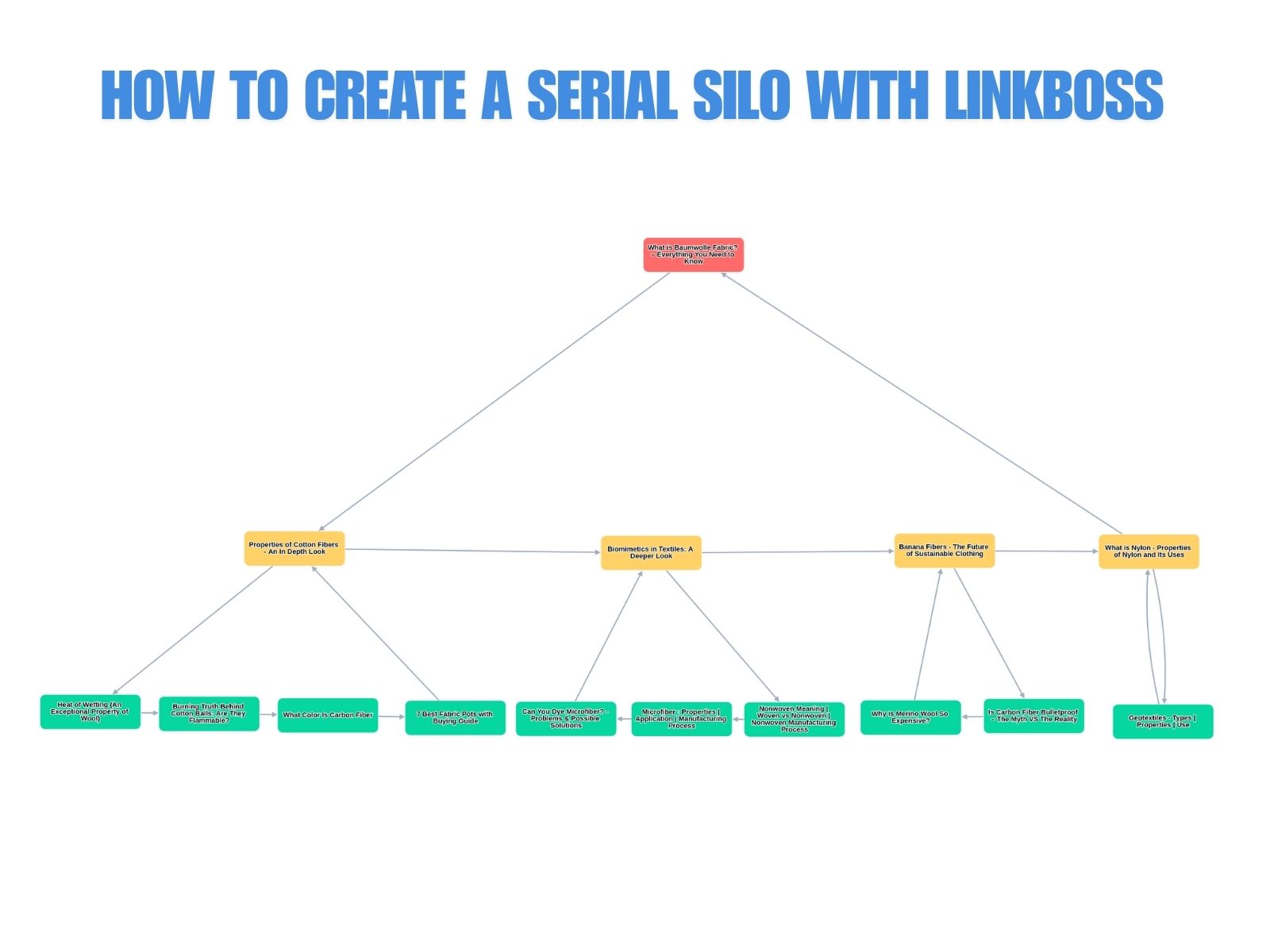
A serial silo is an internal linking structure where pages connect sequentially in a linear chain: Page A links to Page B, Page B links to Page C, and Page C links to Page D. Each page in the chain links only to its immediate successor and predecessor, creating a one-directional topical pathway through related content. Matt Diggity, founder of Diggity Marketing, formalized the serial silo as a named structure type in his widely referenced silo classification system.
The serial silo derives from Bruce Clay’s foundational siloing framework, developed in the early 2000s, which established the principle that organized internal linking structures signal topical authority to search engines. The serial variant applies this principle through sequential, chain-style linking rather than hierarchical or radial patterns.
The 3 defining characteristics of a serial silo:
- Linear chain architecture: Pages form a single connected path with no branching or cross-linking between non-adjacent pages. Each page has at most 2 internal links within the silo, one forward and one backward.
- Sequential content flow: The linking order follows a logical progression (chronological, procedural, or topical), guiding both users and crawlers through content in a defined sequence.
- Unidirectional equity transfer: Link equity flows through the chain in one primary direction. Page A’s authority passes to Page B, Page B’s accumulated authority passes to Page C, and so on.
How Does a Serial Silo Distribute Link Equity?
Link equity in a serial silo flows sequentially through a linear chain: each page receives authority from the preceding page and passes a portion to the next page, with equity diminishing at each step due to Google’s damping factor. The page at the beginning of the chain receives the strongest equity position, while pages deeper in the chain receive progressively less accumulated authority.
Google’s original PageRank formula applies a damping factor of approximately 0.85, meaning each “hop” through an internal link reduces the equity passed. In a serial chain of 6 pages, the 6th page receives equity diluted by 5 damping steps. Moz recommends maintaining “the minimum amount of links possible between the homepage and any given page” for this reason.
The 3 factors that affect equity distribution in a serial silo:
- Chain length: Shorter chains (3–4 pages) preserve equity better than longer chains (8+ pages). Each additional page in the chain introduces another damping step that reduces the equity reaching the final page.
- Entry point authority: The first page in the chain typically receives the most external backlinks and organic traffic. Its authority cascades through the chain but diminishes with each link hop.
- Bidirectional linking: Most serial silos include backward links (Page C links back to Page B) in addition to forward links. This creates a partial equity return loop that strengthens intermediate pages.
What Are the 4 SEO Benefits of a Serial Silo?
The 4 SEO benefits of a serial silo are controlled topical narrative flow, thematic concentration along a single subject pathway, simplicity of implementation, and natural sequential content consumption. Each benefit addresses a specific aspect of how search engines process and rank connected content.
- Control topical narrative flow for users and crawlers. The serial silo guides Googlebot through content in a defined order, so crawlers discover pages in the right order. Bruce Clay’s framework emphasizes that organized linking “lets search engines understand the site’s theme by following organized pathways.”
- Concentrate thematic relevance along a single subject pathway. Hub-and-spoke models distribute equity radially across independent subtopics, but the serial model maintains thematic focus along one topical thread. Each page reinforces the semantic signal of the preceding page, building concentrated topical authority.
- Simplify implementation and maintenance. Each page links only to 2 adjacent pages (one forward, one backward). This makes the serial silo the easiest structure to implement manually and the simplest to audit for broken links or orphan pages.
- Match natural sequential content consumption patterns. Tutorials, multi-part guides, and step-by-step processes follow a logical order that the serial silo mirrors exactly. Users progressing through a tutorial series encounter “next” and “previous” links that match their reading behavior.
When Should You Use a Serial Silo Structure?
Deploy a serial silo when content follows a natural sequential progression: tutorials, multi-part guides, chronological content, or any topic that requires readers to follow a defined order. The serial silo works well for guiding users through step-by-step processes where each page builds on the knowledge established in the previous page.
The 5 content types that align with serial silo structures:
- Multi-part tutorials and courses: Lesson 1 precedes Lesson 2, which precedes Lesson 3. The serial chain mirrors the instructional progression.
- Step-by-step process guides: “How to start a blog” split across 6 pages (setup, hosting, theme, content, SEO, monetization), each linking to the next logical step.
- Chronological or timeline-based content: Historical narratives, product evolution timelines, or event sequences where temporal order matters.
- Product category progressions: E-commerce paths that guide users from beginner products to advanced options, or from budget to premium tiers.
- Long-form content divided across multiple URLs: A detailed topic split into chapters, where each chapter links to the next to maintain narrative continuity.
Avoid a serial silo when pages are loosely related without a logical sequence (use a circle silo instead), when all pages need equal authority distribution (use a hub-and-spoke model instead), or when a single revenue page requires maximum equity concentration (use a priority silo instead).
How to Create a Serial Silo in LinkBoss Custom Network?
Building a serial silo in LinkBoss requires 6 steps: navigate to Custom Network, add URLs via category or topic search, submit the cluster, select the serial silo preset, review the chain structure visually, and execute Boss Mode for automatic sequential linking. LinkBoss calculates the optimal page order based on semantic similarity and generates NLP-optimized anchor text for each sequential link.
Step 1: Access the Custom Network Tool
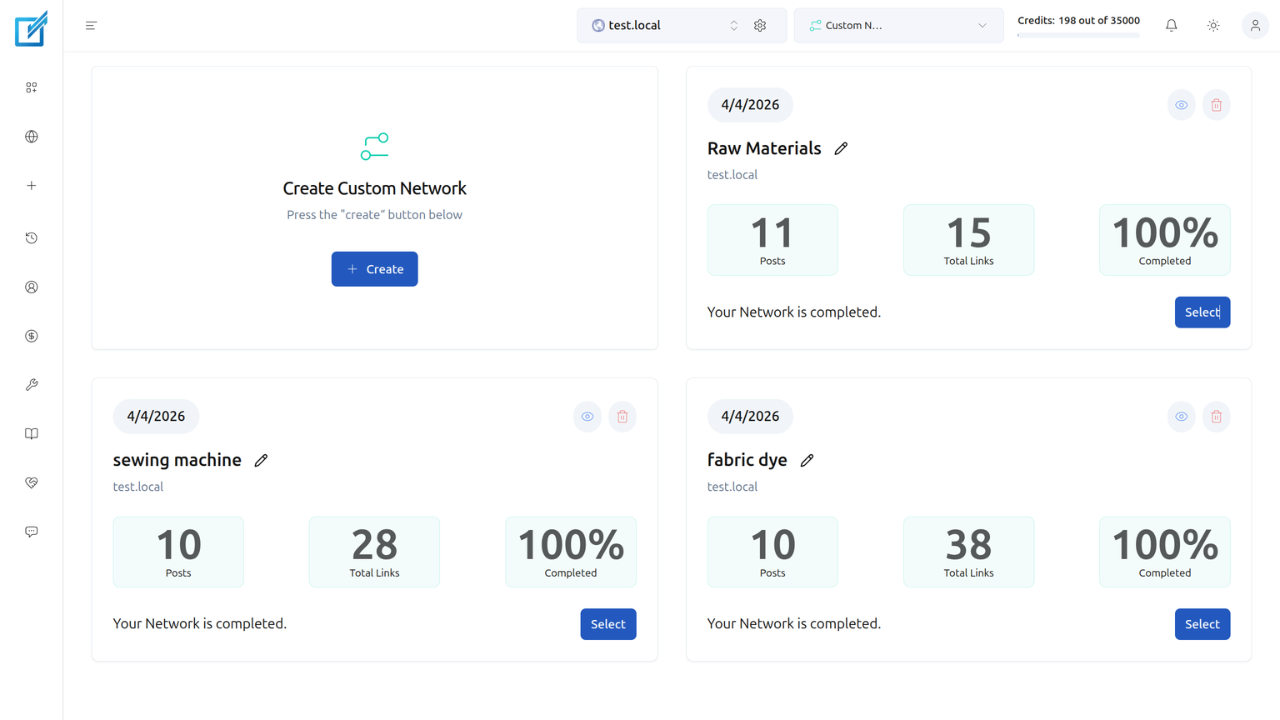
Open the LinkBoss dashboard. Navigate to Tools → Custom Network → Create. The Create Custom Network page loads with a URL input field and a right sidebar containing 3 tabs for adding URLs.
Step 2: Add URLs to Your Topic Cluster
The right sidebar provides 3 methods for selecting URLs:
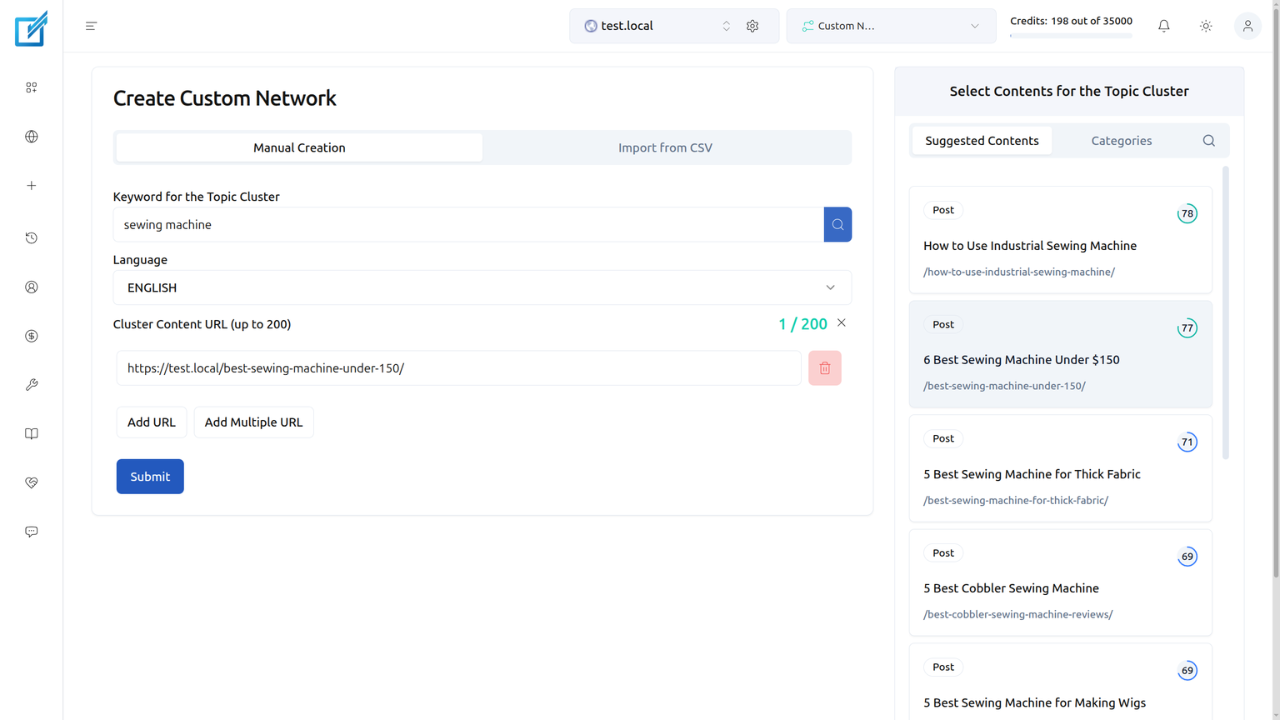
- Suggested Contents: Enter a topic keyword in the Keyword for Topic Cluster field. LinkBoss returns URLs ranked by semantic similarity score. Select pages that form a logical sequential progression.
- Categories: Switch to the Categories tab. Find the relevant category, click Fetch, then Add to load those URLs into the cluster. This method works well when a category contains a natural content sequence.
- Search: Find specific pages by title keyword to add individually.
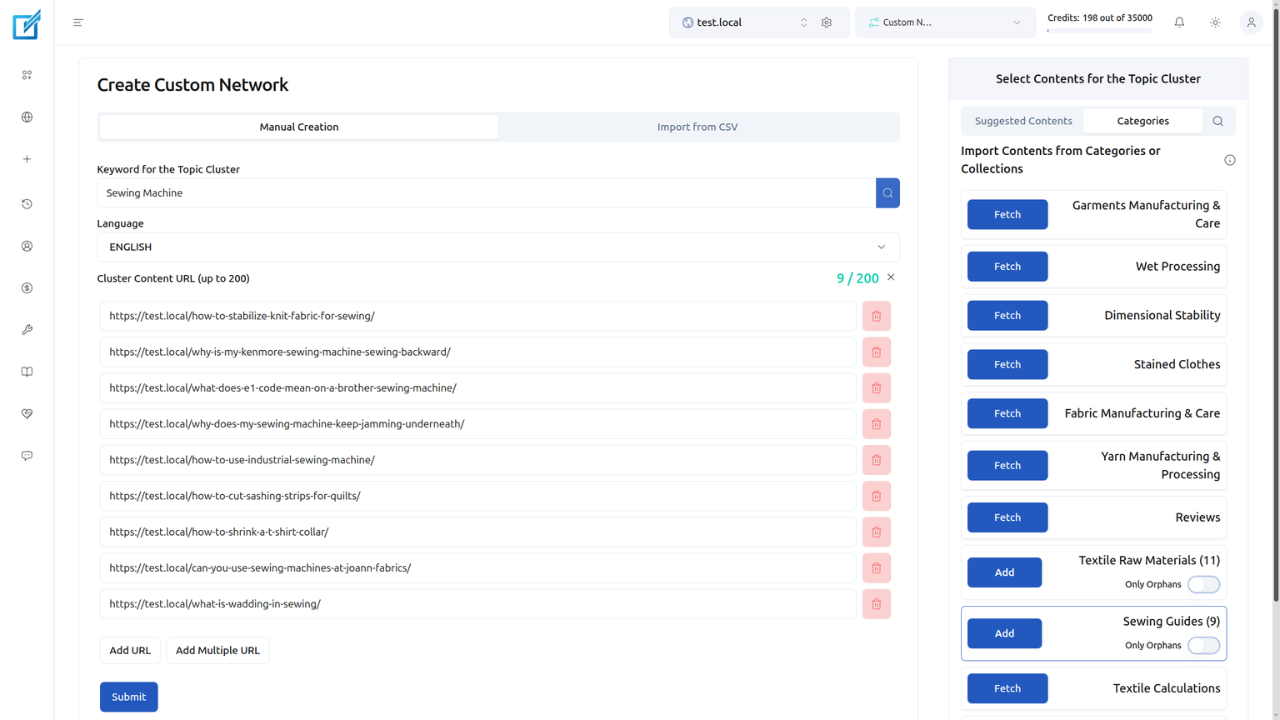
For a serial silo, select pages that follow a logical topical or procedural sequence. The order of pages determines the chain direction, and LinkBoss arranges them based on semantic relatedness.
Step 3: Submit the Cluster
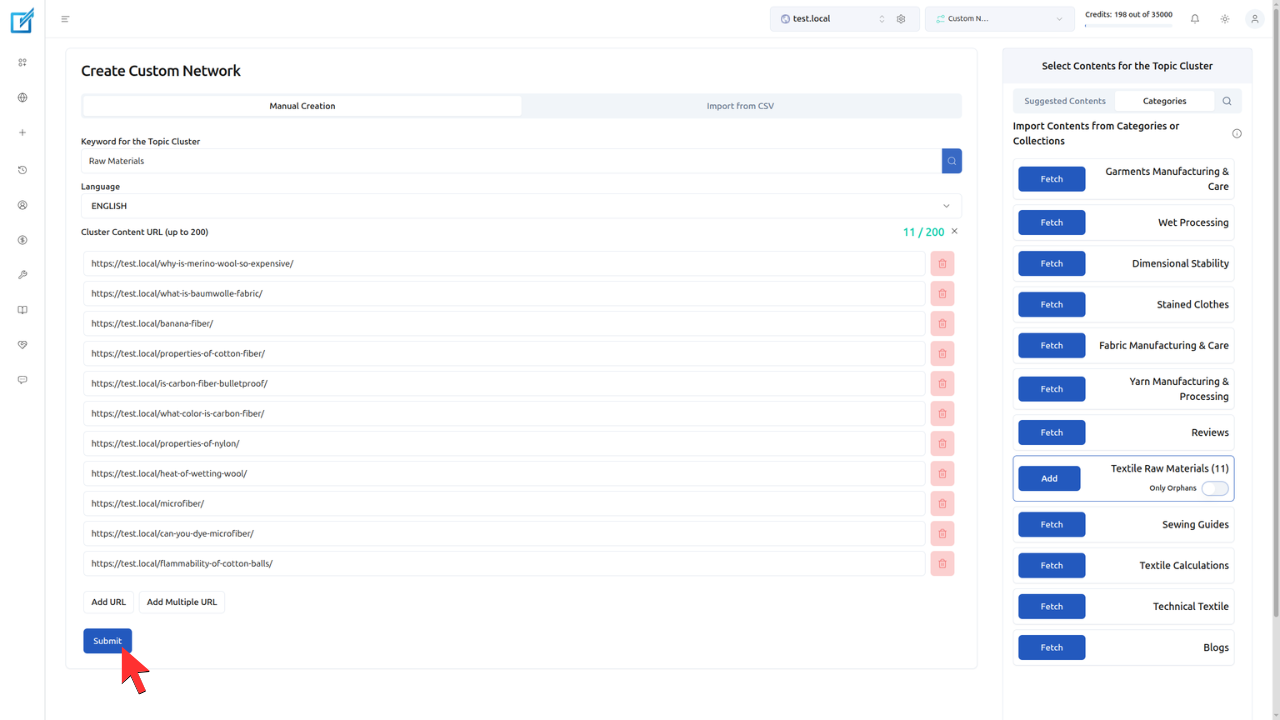
Type a descriptive name in the Keyword for Topic Cluster field. Click Submit. LinkBoss processes the selected URLs and advances to the silo configuration screen.
Step 4: Select the Serial Silo Preset
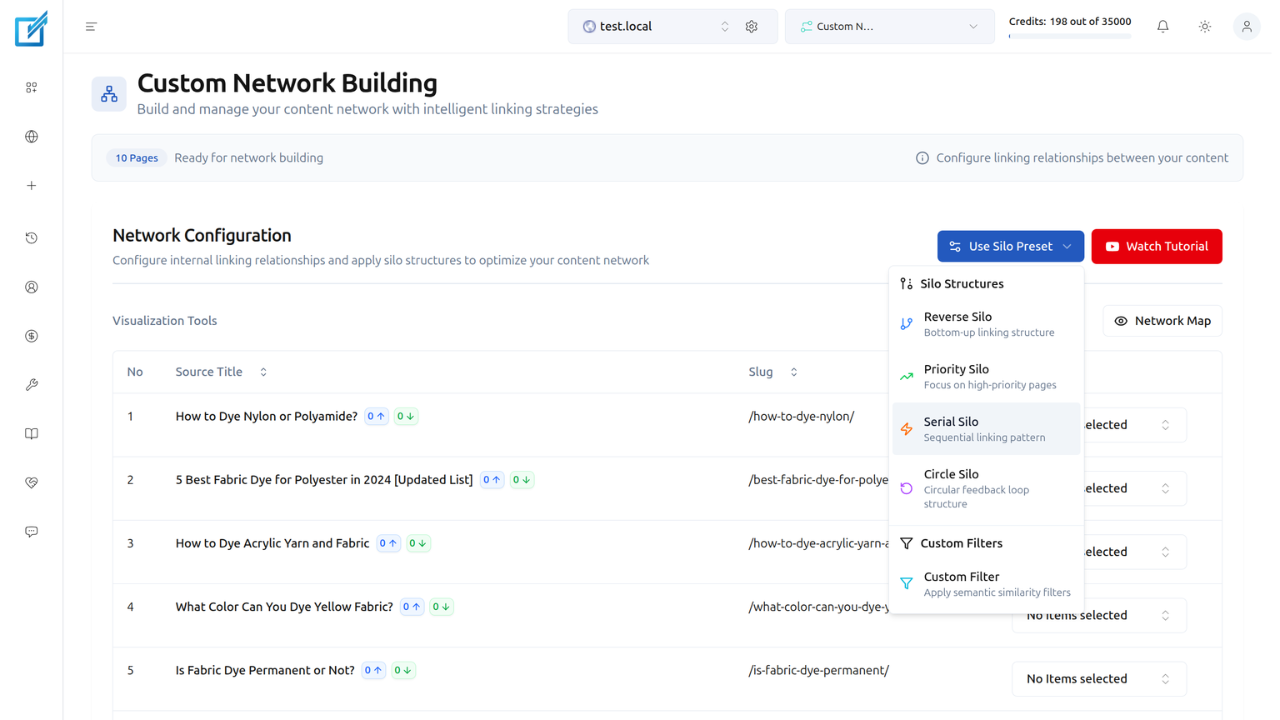
Click Use Silo Preset on the configuration screen. Choose Serial Silo from the available options. Optionally select a Parent Node (a pillar or category page that anchors the chain). Click Generate Serial Silo.
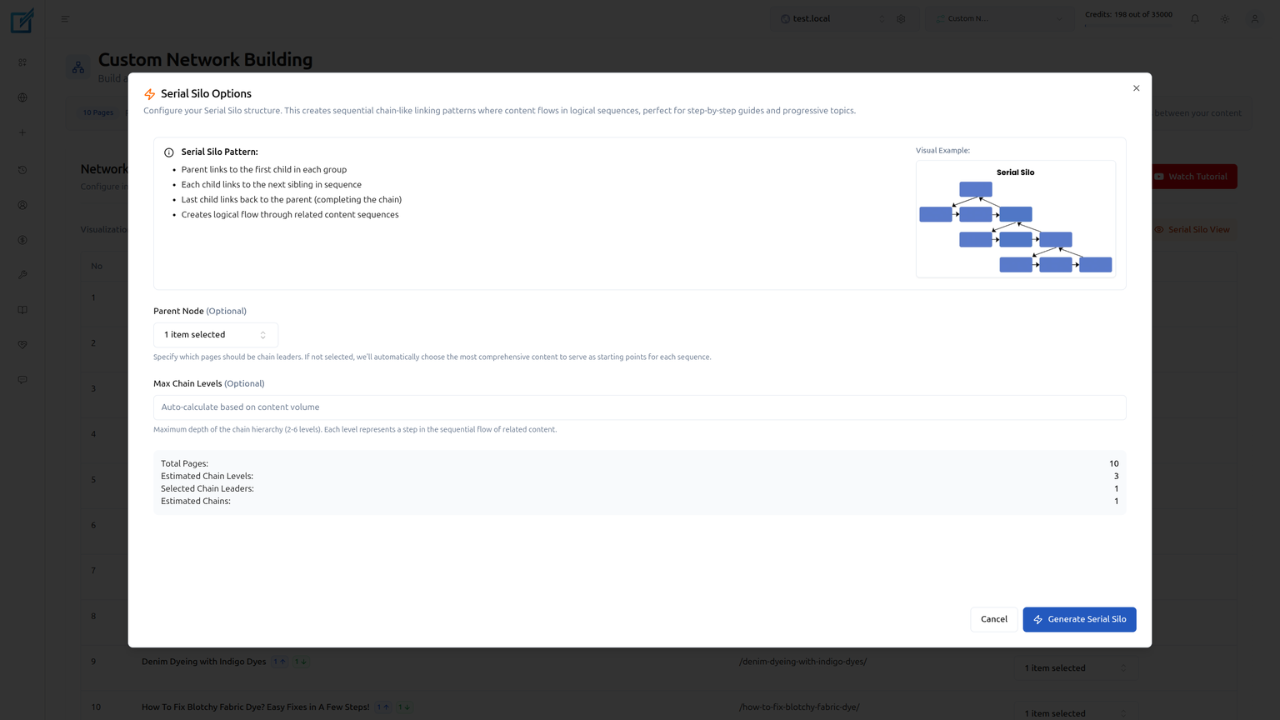
LinkBoss automatically calculates the sequential linking structure, arranging pages in a chain where each page links to the next and previous page in the sequence.
Step 5: Review the Visual Chain Structure
Click Serial Silo View to see the linking chain displayed as a visual diagram. Verify that:
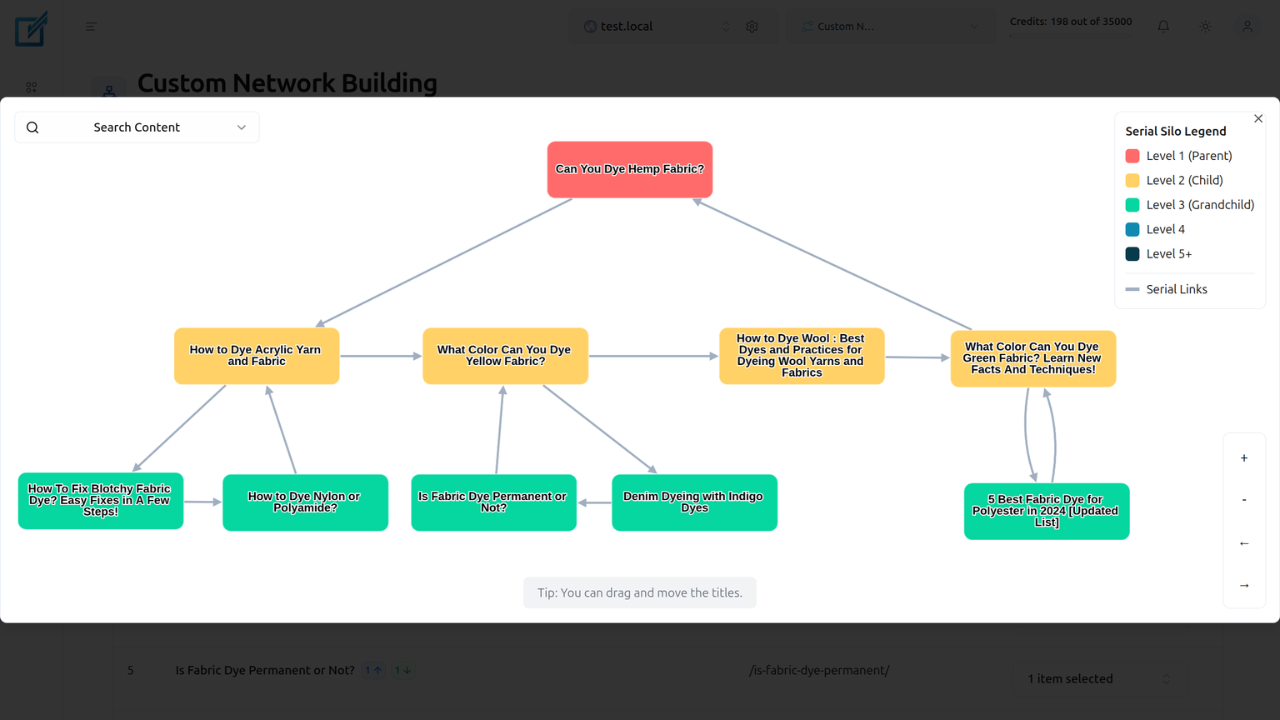
- Pages are arranged in the intended sequential order
- Each page links to the next and previous page in the chain
- Anchor texts reflect the topical connection between adjacent pages
- The chain begins and ends at the correct pages
Step 6: Execute Boss Mode
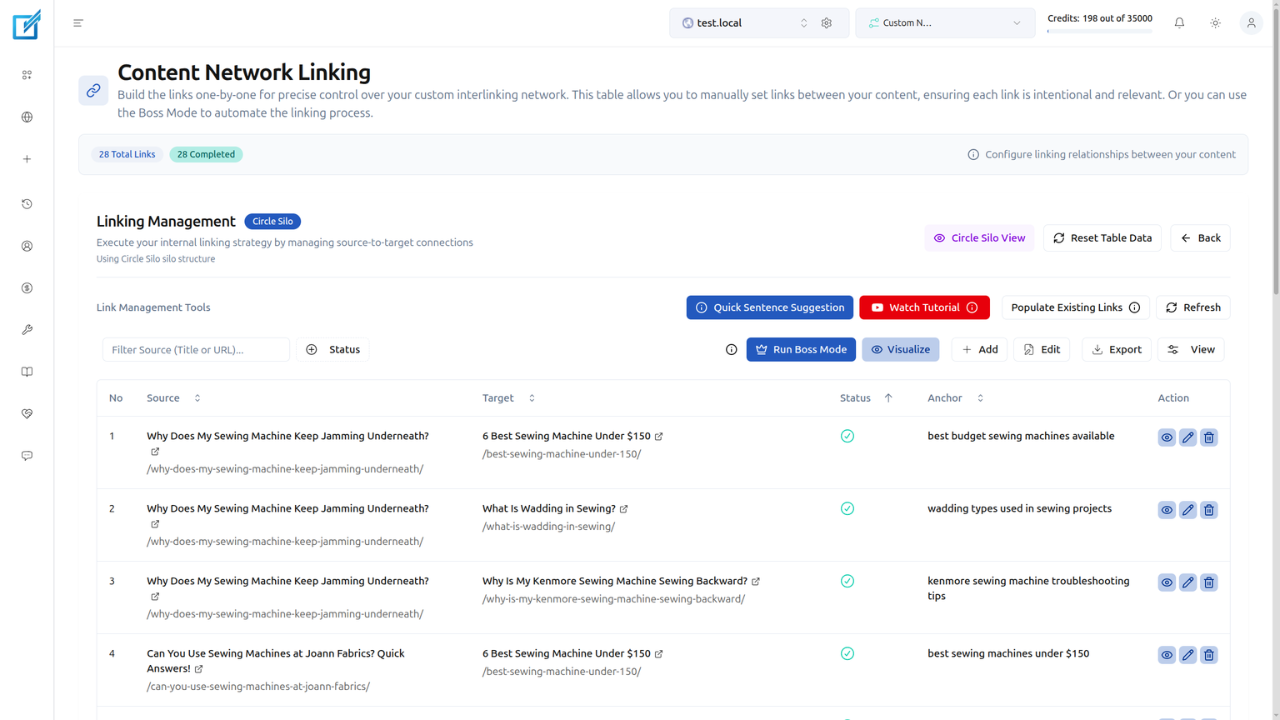
Click Next, then Run Boss Mode → Let’s Go.
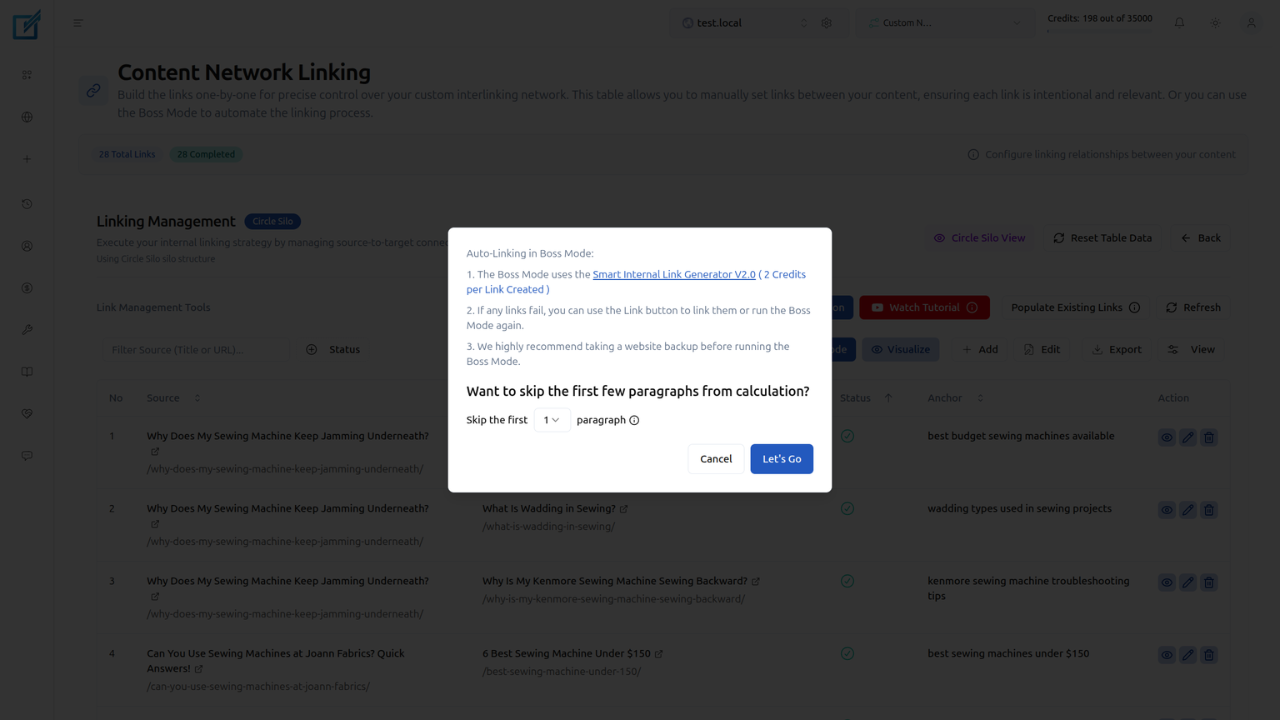
Boss Mode uses the Smart Internal Link Generator V2.0 to insert every link in the serial chain. For each connection between adjacent pages, the system:
- Finds the most semantically relevant paragraph in the target post based on NLP analysis of content meaning.
- Generates 2–3 new contextual sentences that are appended after that paragraph. These sentences naturally lead into the anchor text rather than forcing a link into existing content.
- Embeds NLP-optimized anchor text within the generated sentences so the link reads as a natural part of the paragraph, not an insertion.
This approach differs from simple link wrapping (the “In-Post Sentences” method), which only inserts a link into an existing sentence. Boss Mode adds fresh context around each link, which produces more natural-sounding content and stronger topical signals for search engines.
The process runs in the background. LinkBoss deploys all links directly to your live site and notifies you on completion. After Boss Mode finishes, you can go back and edit individual links, modify anchor text, or adjust the surrounding context.
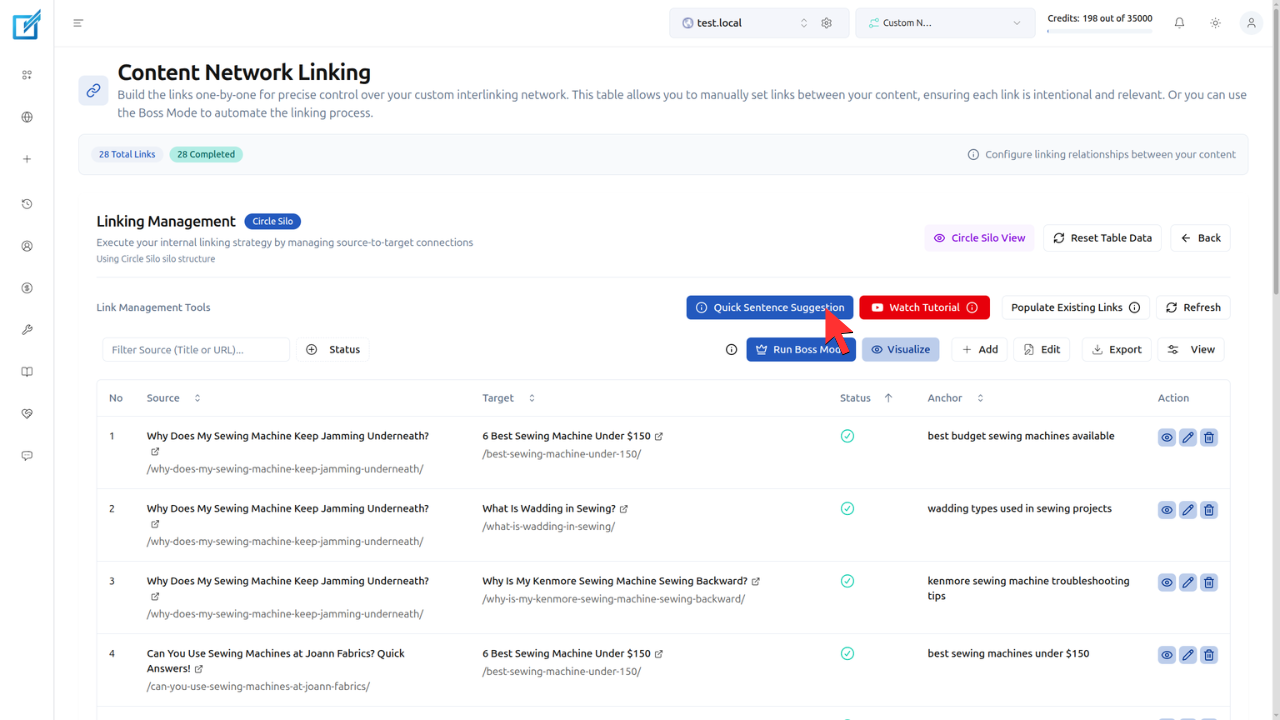
If you prefer not to add new sentences to your posts, use the Quick Sentence Suggestions route instead of Boss Mode. This option inserts links into existing sentences without generating additional content. It costs 1 credit per link instead of 2 credits.
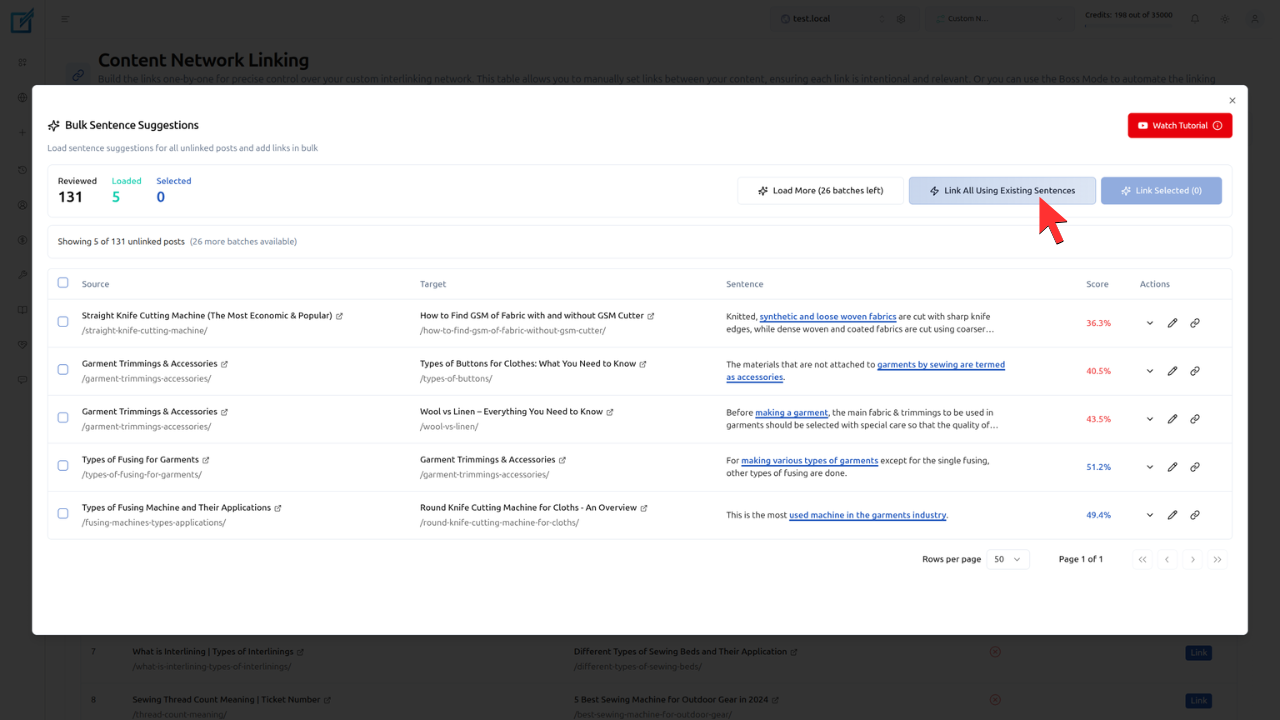
The entire serial silo structure is generated in under 2 minutes, compared to the manual process of individually editing each page to add sequential links, which takes 40x longer. Links remain permanent even after removing the LinkBoss plugin. Boss Mode costs 2 credits per link (compared to 1 credit per link for the In-Post Sentences method).
What Types of Websites Benefit Most from a Serial Silo?
The 3 types of websites that benefit most from a serial silo are educational and tutorial-based sites, multi-part content publishers, and e-commerce stores with progressive product lines. Each site type produces content with a natural sequential order that the serial chain structure reinforces.
- Educational and tutorial sites: Online courses, coding tutorials, and skill-building content where each lesson builds on the previous one. The serial silo guides learners through content in the intended order while passing link equity through the chain.
- Multi-part content publishers: Sites that regularly publish series, investigations, or long-form content split across multiple pages. The serial chain maintains narrative continuity and ensures readers discover all parts of a series.
- E-commerce stores with progressive product lines: Sites where products follow a logical progression (beginner to advanced, budget to premium, or basic to full-featured). The serial silo guides shoppers through the product line while distributing link equity across the catalog.
How Does a Serial Silo Compare to Other Silo Structures?
A serial silo differs from other silo structures in its linear chain architecture, sequential equity flow, and suitability for ordered content. The 4 common silo structures serve distinct strategic purposes based on content organization and ranking goals.
| Structure | Link Pattern | Equity Flow | Best Use Case |
|---|---|---|---|
| Serial Silo | Linear chain (A → B → C → D) | Sequential, diminishing | Tutorials, ordered guides |
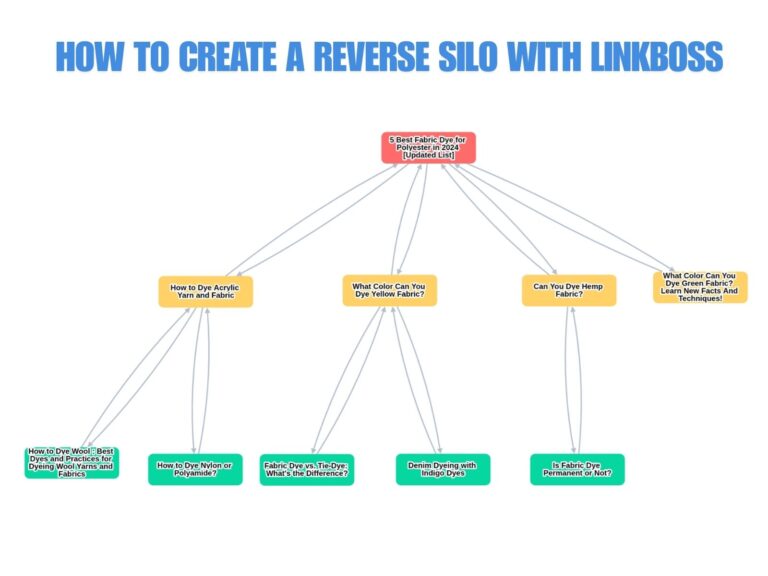
| Reverse Silo | Bottom-up (support → target) | Concentrated on 1 page | Commercial page support |
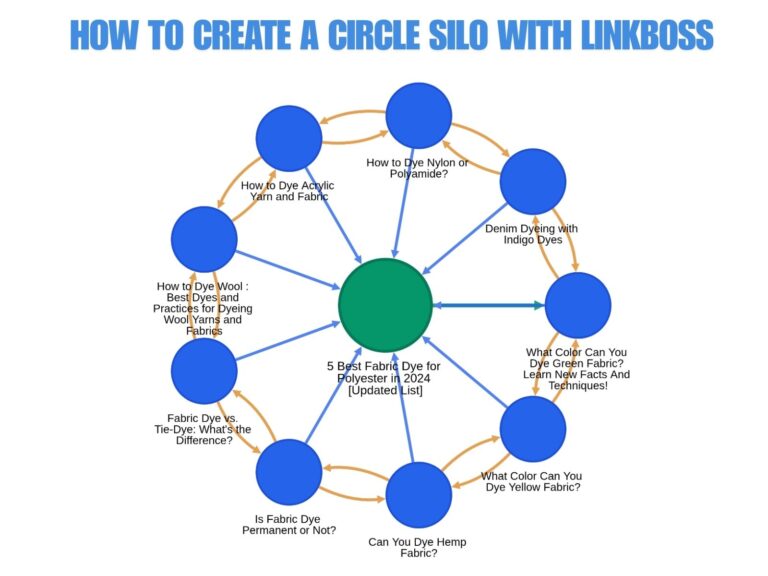
| Circle Silo | Circular closed loop | Distributed evenly | Blog clusters, entity SEO |
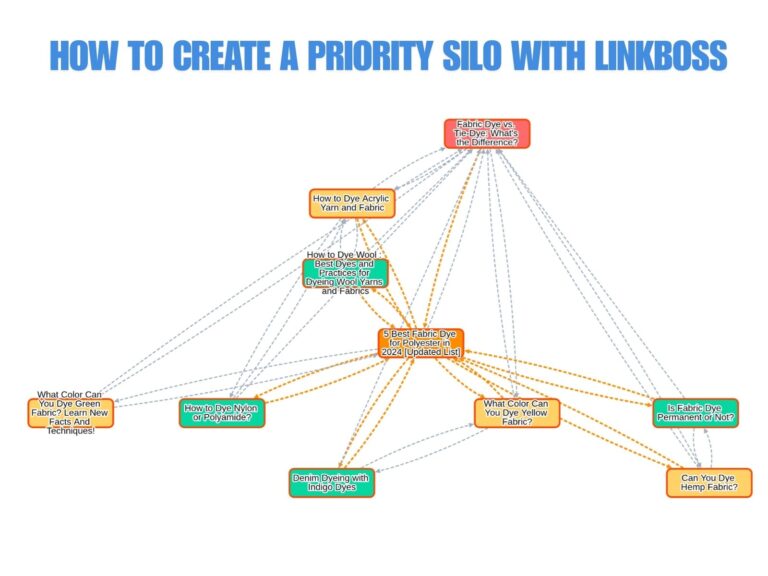
| Priority Silo | Asymmetric many-to-1 | Concentrated on priority page | Revenue-focused pages |
The serial silo is the only structure that enforces a strict sequential order. The circle silo connects pages in a loop (the last page links back to the first), while the serial silo leaves the chain open: the first and last pages have only 1 internal link within the silo.
Matt Diggity notes that the serial silo works best for content with a natural progression but recommends against using it for general topical clusters where pages lack a clear sequential relationship.
What Crawl and Indexation Effects Does a Serial Silo Produce?
A serial silo increases crawl depth for pages deeper in the chain: the Nth page in the chain requires N clicks from the homepage to reach, which reduces crawl frequency and indexation speed for later pages. Semrush recommends a maximum of 3 clicks from the homepage to any page for efficient crawling.
The 3 crawl-related considerations for serial silos:
- Crawl depth accumulation: A 10-page serial chain places the 10th page 10 clicks from the homepage. Google allocates lower crawl budget to deeper pages, reducing how often they are re-crawled and updated in the index.
- Single-path discovery risk: In a pure serial chain, removing any single link breaks the discovery path to all subsequent pages. This creates orphan page risk, since Google cannot discover pages that have zero inbound links.
- Mitigation through supplementary navigation: XML sitemaps, breadcrumb navigation, and footer links provide alternative discovery paths that supplement the serial chain. These make sure crawlability does not depend solely on the sequential links.
Moz defines crawl depth as “a number that indicates a page’s distance from the home page” and warns that “a higher crawl depth could affect a page’s crawlability.” For serial silos with more than 5 pages, supplement the chain with alternative navigation paths.
Matt Diggity notes that the serial silo works best for content with a natural progression but recommends against using it for general topical clusters where pages lack a clear sequential relationship.
Frequently Asked Questions About Serial Silo Structures
What Is the Difference Between a Serial Silo and a Circle Silo?
A serial silo connects pages in an open linear chain: the first page and last page have only 1 internal link within the silo. A circle silo closes the loop by linking the last page back to the first page, creating a circular ring where no page is a dead end. The circle silo distributes equity more evenly; the serial silo maintains a directional flow.
How Many Pages Can a Serial Silo Include?
A serial silo functions best with 3–7 pages. Chains longer than 7 pages introduce excessive crawl depth and equity dilution. Bruce Clay recommends “a minimum of 5 content pages to establish the theme” of a silo, and the serial silo follows the same lower bound. For topics requiring more than 7 pages, split the content into multiple shorter serial chains connected through a parent category page.
Does LinkBoss Determine the Order of Pages in a Serial Silo Automatically?
Yes. LinkBoss uses semantic similarity scoring to arrange pages in the optimal sequential order. The NLP algorithm analyzes the topical content of each page and determines which pages logically follow each other based on contextual overlap and semantic distance.
Can a Serial Silo Work Alongside Other Silo Structures?
Yes. A serial silo can operate within a larger site architecture that uses different silo structures for different content sections. A tutorial series uses a serial silo, while product pages use a priority silo, and blog clusters use a circle silo. Each structure serves the specific content type and ranking goal of its section.
Does a Serial Silo Require Changes to URL Structure?
No. The serial silo is a virtual structure created through internal linking. It does not require URL restructuring, directory reorganization, or changes to site architecture. LinkBoss implements the serial chain entirely through in-content links that connect pages in the specified sequence.
References
- Matt Diggity. “SEO Silos: How to Rank for More Keywords Without Building Links.” YouTube
- Bruce Clay. “SEO Silos: How to Build a Website SEO Silo.” bruceclay.com
- Moz. “Internal Links SEO Best Practices.” moz.com
- Semrush. “What Is Website Architecture?” semrush.com