Trusted by 7,000+ SEO professionals worldwide
When Automation Becomes
an SEO Liability.
Internal Link Juicer automates link insertion using exact keyword matching — every instance of a keyword gets linked regardless of context, creating 100% exact-match anchor density that signals manipulation to Google. LinkBoss uses semantic AI to understand context, vary anchor text, and place links only where they genuinely improve the reader experience.
3 Reasons SEOs Choose LinkBoss Over Internal Link Juicer
Don’t have time for the full breakdown? Here’s what matters most.
Semantic Understanding vs Blind Keyword Rules
ILJ links every instance of a keyword regardless of context — a passing mention gets the same link as a substantive discussion. LinkBoss reads the paragraph, evaluates relevance, and places links only where they make editorial sense.
Anchor Text Penalty Protection
ILJ creates 100% exact-match anchor density — Google’s spam policies specifically warn against this. LinkBoss distributes semantic anchor variations naturally, keeping your profile within organic ranges.
Complete Architecture Suite
ILJ is a keyword automation plugin with no architectural tools. LinkBoss adds bulk AI processing, silo builder, anchor manager, site visualizer, GSC analytics, and free site audits — a complete internal linking platform.
The Truth About Pricing
ILJ’s free tier is tempting, but “free automation” that creates algorithmic penalties is the most expensive kind. The real cost isn’t the plugin price — it’s the ranking damage from unnatural anchor profiles.
Smart automation: Every link is evaluated for contextual relevance before placement. Anchor text varies naturally across semantically equivalent phrases. The system actively prevents over-optimization by distributing anchor variations.
Launch plan — $99/year: 2,400 credits for automated link insertion with AI quality control. Your site’s anchor profile stays within organic ranges.
100% exact-match anchor density. Every link to the same destination uses identical anchor text. A single keyword rule like “internal linking” linking to one page across 500 posts creates 500 identical anchor instances. Google’s link spam updates treat unnaturally concentrated anchor text as a manipulation signal.
No architectural tools. No silo builder, no anchor manager, no site visualizer, no GSC analytics, no bulk AI processing, no multi-site management, no anchor text distribution tracking. Just keyword rules that execute deterministically.
Semantic AI vs Exact Keyword Matching
This isn’t a debate about features — it’s about whether your automation strengthens or damages your site’s relationship with Google’s algorithms.
The result: anchor text varies naturally (e.g., “internal link structure,” “how to organize site links,” “link hierarchy planning”) across the same destination, each matching the specific sentence context. Your domain’s anchor distribution stays within ranges that look organic to search algorithms.
This produces placements that are grammatically awkward, contextually irrelevant, or redundant. A sentence like “We shifted our budget toward content marketing” receives the same treatment as “Content marketing is a broad field that includes blogging, video, and social media.” One is a passing reference; the other is a topical anchor point. ILJ cannot tell the difference.
Why Exact-Match Automation Is an SEO Liability
Google’s spam policies specifically warn against optimized anchor text in large-scale patterns that appear manipulative. ILJ’s deterministic keyword matching is the fastest way to trigger those patterns.
What this protects:
• Anchor text profile stays within organic ranges
• No risk of over-optimization penalties
• Links placed only where editorially relevant
• Entity relationships strengthened, not diluted
• AI quality improves as your content archive grows
The risk compounds with scale:
• More keyword rules = more concentrated profiles
• Larger sites = more identical anchor instances
• No frequency cap fully resolves the distribution problem
• Recovery from algorithmic penalties takes months
• The more aggressively you use ILJ, the worse it gets
Semantic Variation = Algorithmic Trust
Google’s systems assess not just whether a link exists, but whether it serves a purpose for the reader. A link placed where the reader would logically want more information reinforces topical authority. AI-based bulk linking gets more accurate as it maps semantic relationships across a larger archive — a 500-post site produces better placements than a 50-post site.
Exact-Match Bulk = Algorithmic Penalty Risk
Running ILJ aggressively on a 1,000-post site without tight limits is one of the faster ways to build an algorithmically penalizable link profile. A single keyword rule creating hundreds of identical anchor instances, combined with no contextual relevance filter, signals manipulation to Google’s systems. Recovering from that takes far longer than building it right the first time.
6 Features Internal Link Juicer Does Not Have
Beyond the core semantic difference, ILJ lacks the fundamental tools needed to manage link architecture safely at scale.
Anchor Text Variation
ILJ always uses the exact keyword string. Every link to the same destination uses identical anchor text — 100% exact-match density.
Penalty Risk Management
ILJ provides no anchor text distribution tracking or cannibalization detection. You have no visibility into your risk profile.
Silo Builder
No topic cluster creation, no hierarchical linking relationships, no structured silo architecture.
Anchor Text Manager
No centralized dashboard for anchor text distribution, cannibalization detection, or optimization.
Site Visualizer
No visual architecture map to identify isolated clusters, over-linked hubs, or structural weaknesses.
GSC Analytics
No keyword tracking, ranking movement, downtrending alerts, or linking-specific analytics.
LinkBoss Features — Up Close
Every feature designed to build smarter links while protecting your rankings.
Contextual Semantic Interlinking
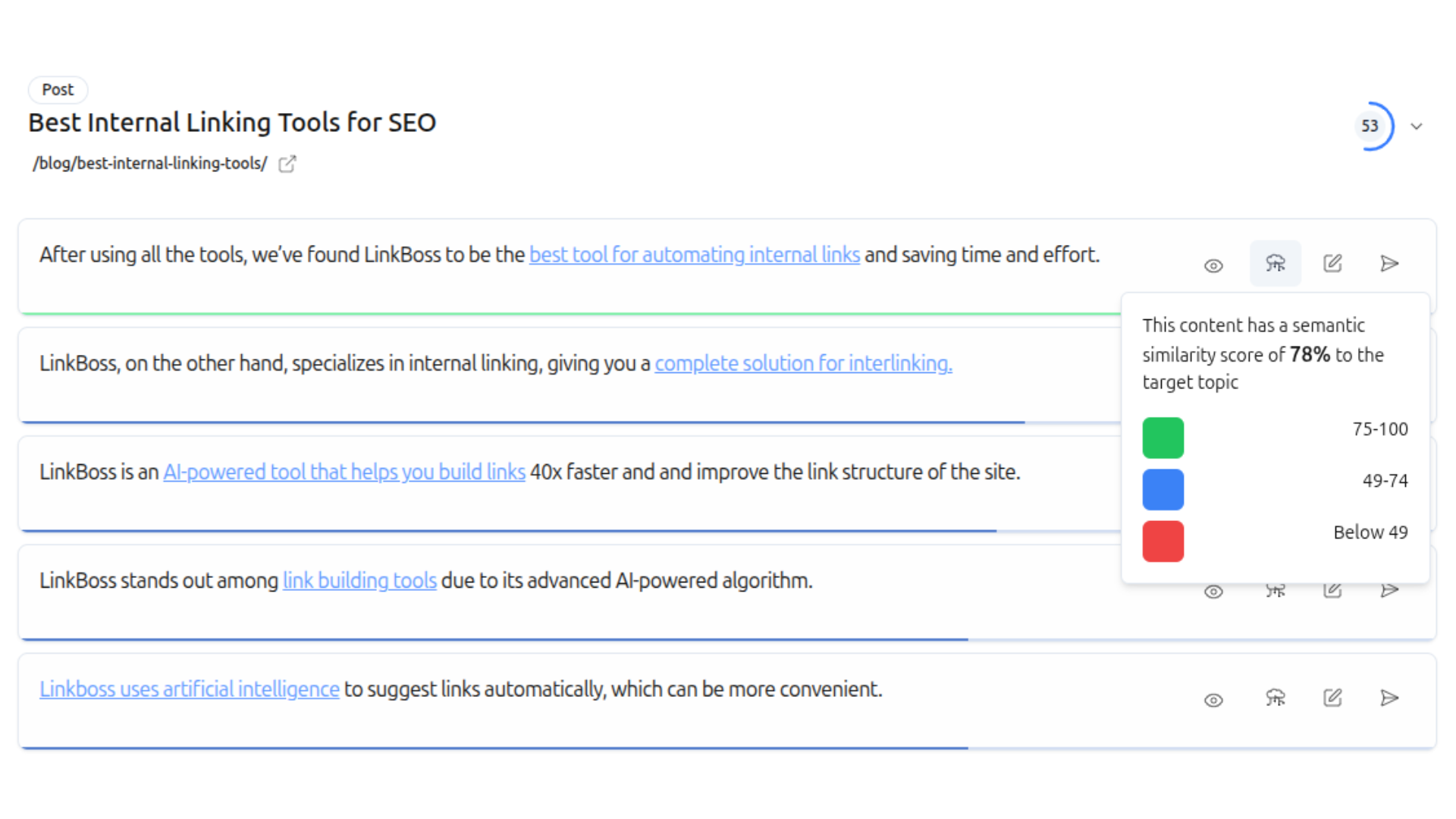
LinkBoss reads the meaning of every sentence and finds the most relevant pages to link to, evaluating context before every placement.
- Understands entities and semantic relationships
- Suggests anchor text that reads naturally in your sentence
- Relevancy scores for every link suggestion
- Smart link generator creates relevant paragraphs when needed
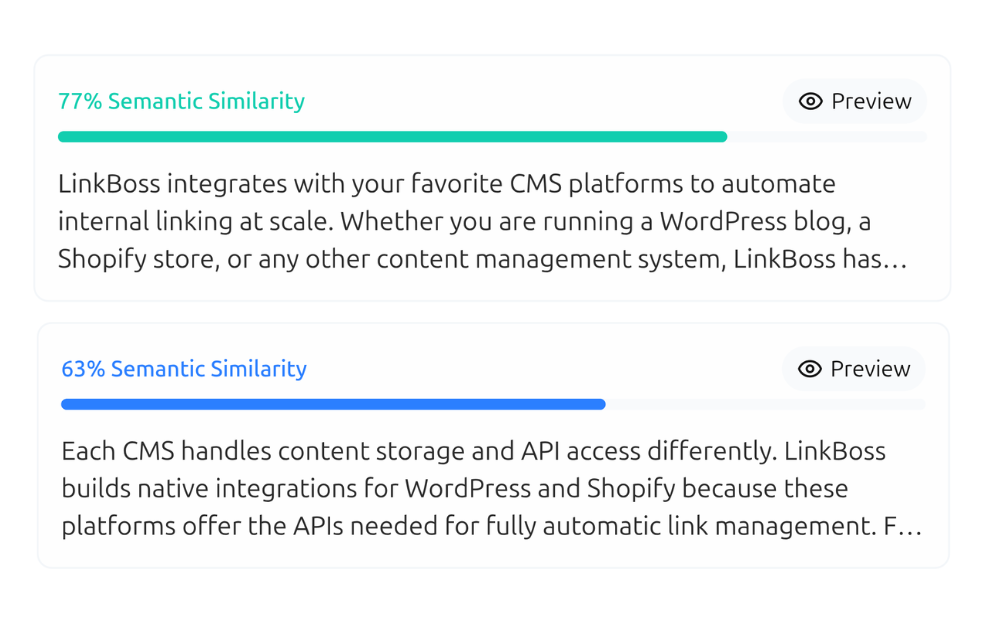
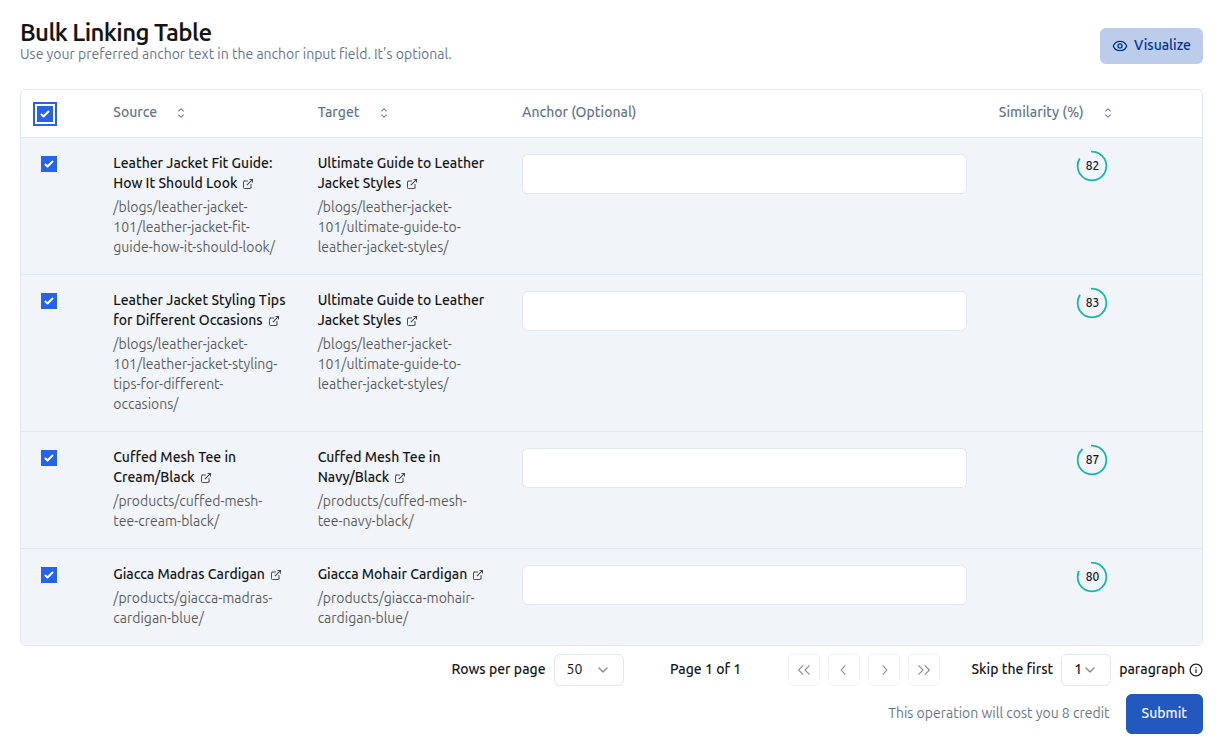
Bulk Auto Interlinking — 1,000 Links in One Click
Get the volume ILJ offers with the editorial intelligence it lacks. Bulk processing with AI quality control.
- Create up to 1,000 interlinks with one click
- AI evaluates context before every placement
- Customize anchor text preferences and filters
- Perfect for large-scale sites and content migrations
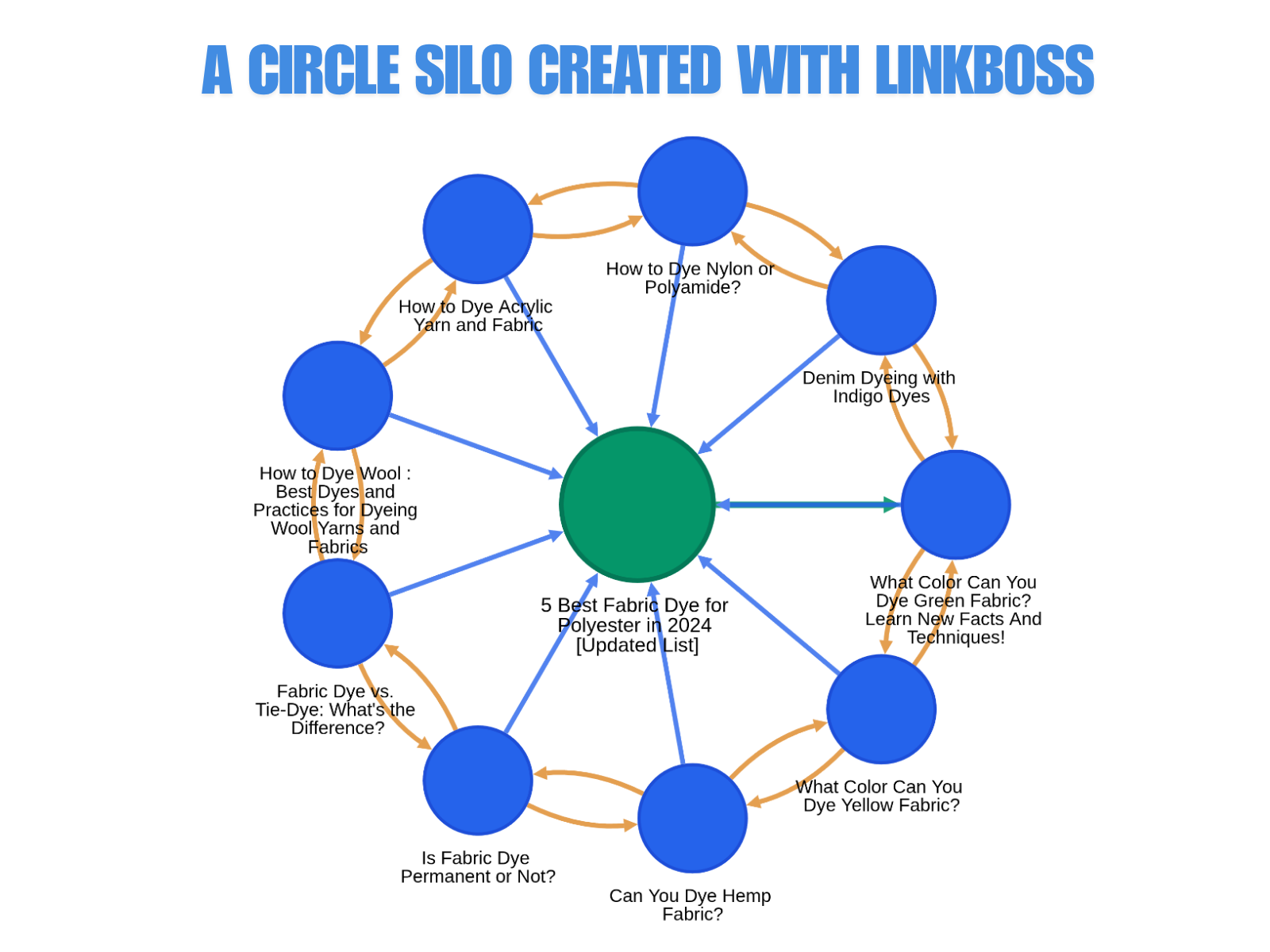
Semantic Silo Builder
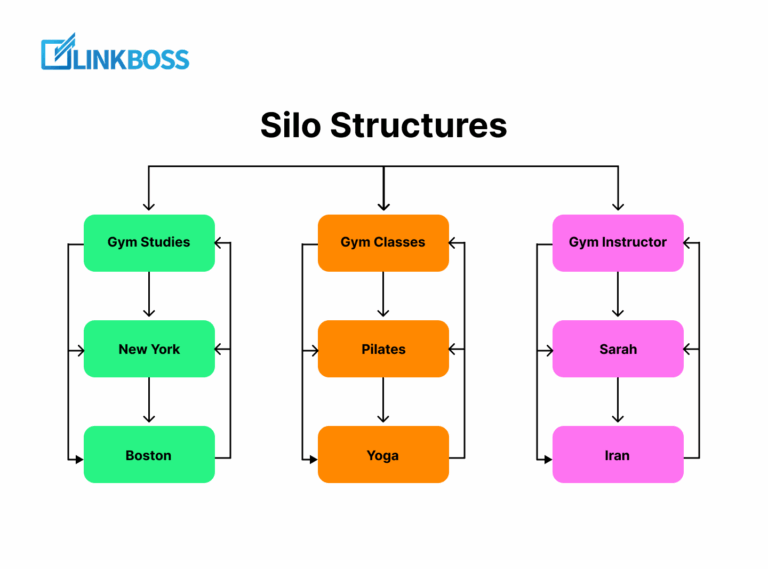
Build authoritative topic clusters with 4 proven silo models — deployed with one click.
- Reverse Silo — push authority up to pillar pages
- Priority Silo — concentrate link juice on high-value pages
- Serial Silo — chain pages in a topical sequence
- Hybrid Circle Silo — combine strategies for maximum coverage
- Visualize your silo structure in real time
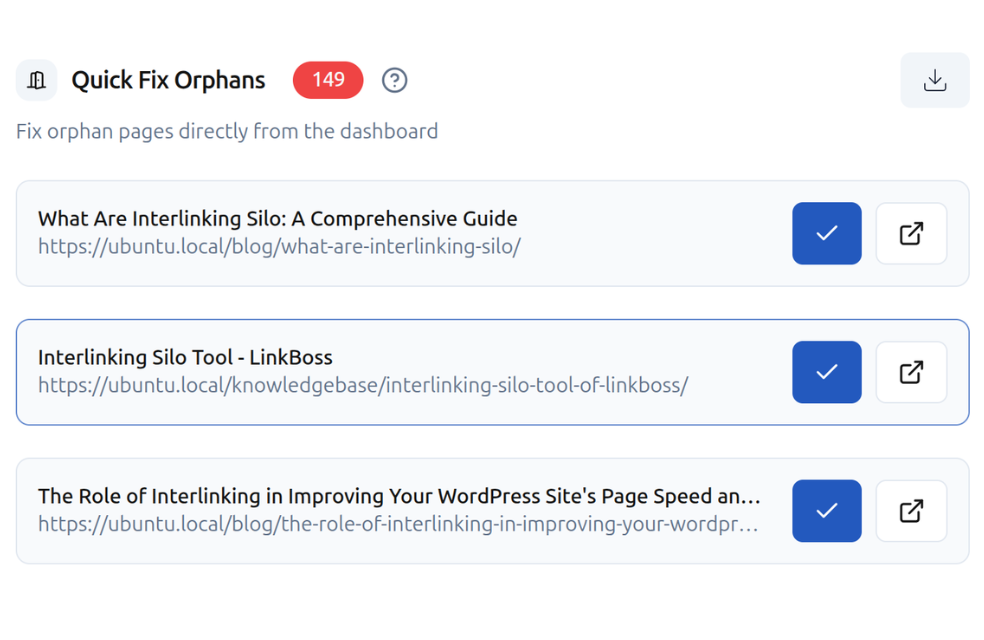
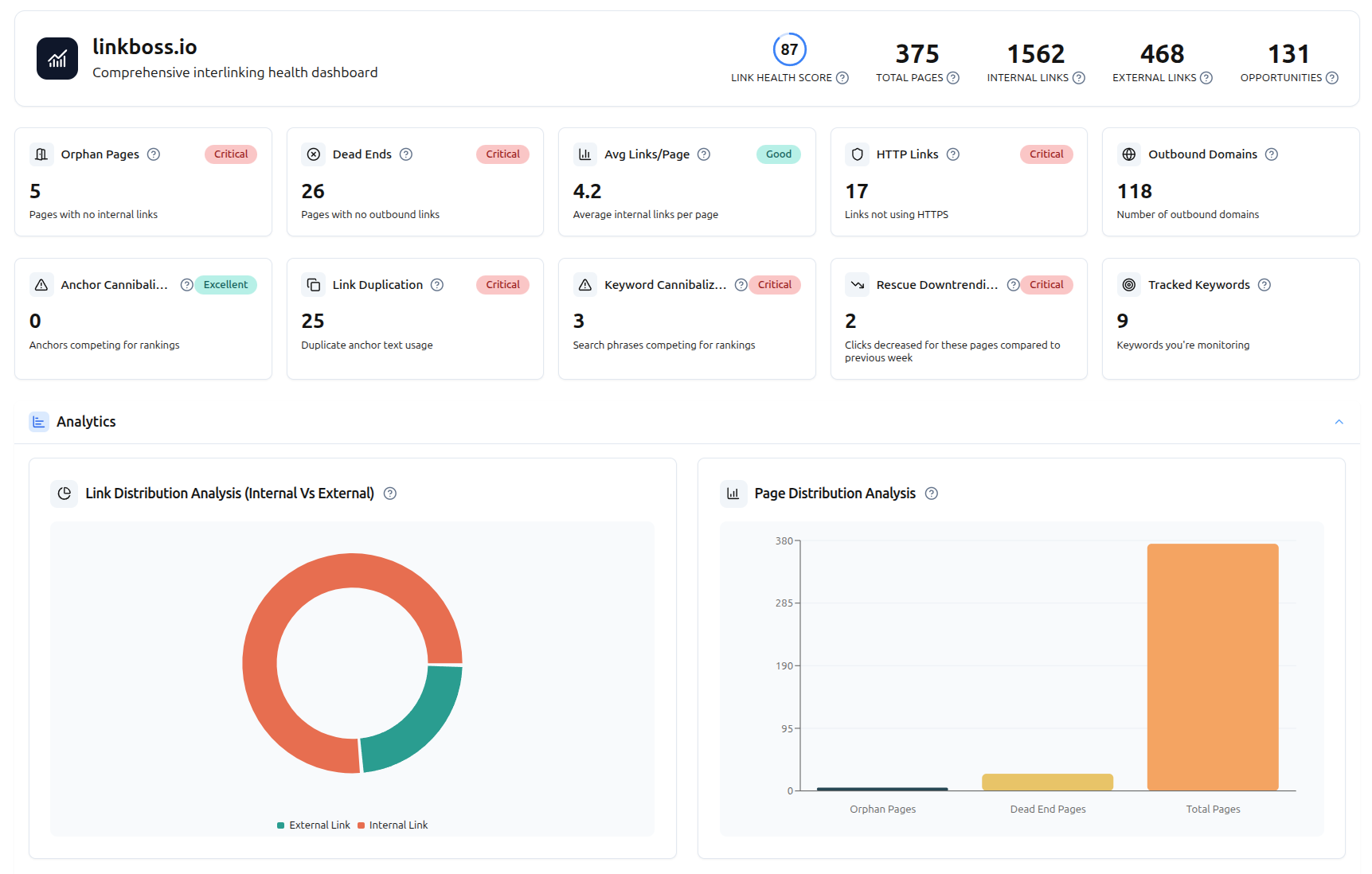
Link Health Monitor & Site Audit
Complete health scoring with orphan detection, dead-end pages, and anchor cannibalization — all free.
- Full site health score & audit dashboard
- Orphan & dead-end page detection
- Link duplication & anchor cannibalization checker
- Link flow score per page
Smart Anchor Text Optimization
See your entire anchor distribution and actively prevent the over-optimization that ILJ creates.
- Complete anchor text distribution overview
- Cannibalization detection — same anchor, different targets
- Edit or delete anchors directly from the dashboard
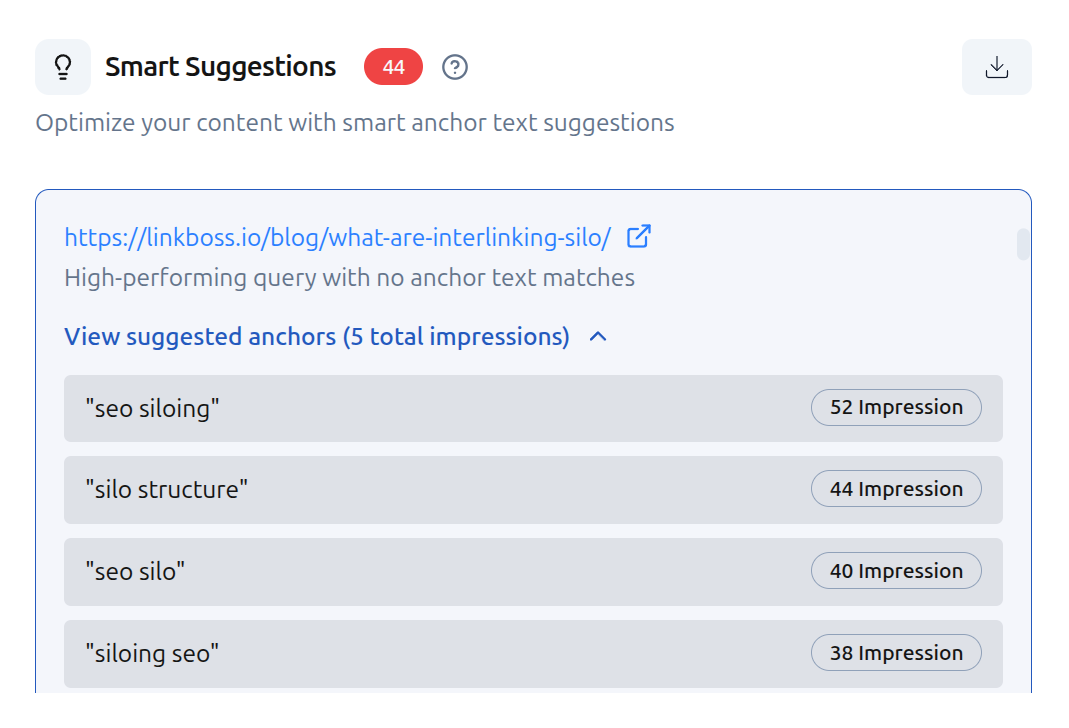
- GSC-powered anchor suggestions from high-impression queries
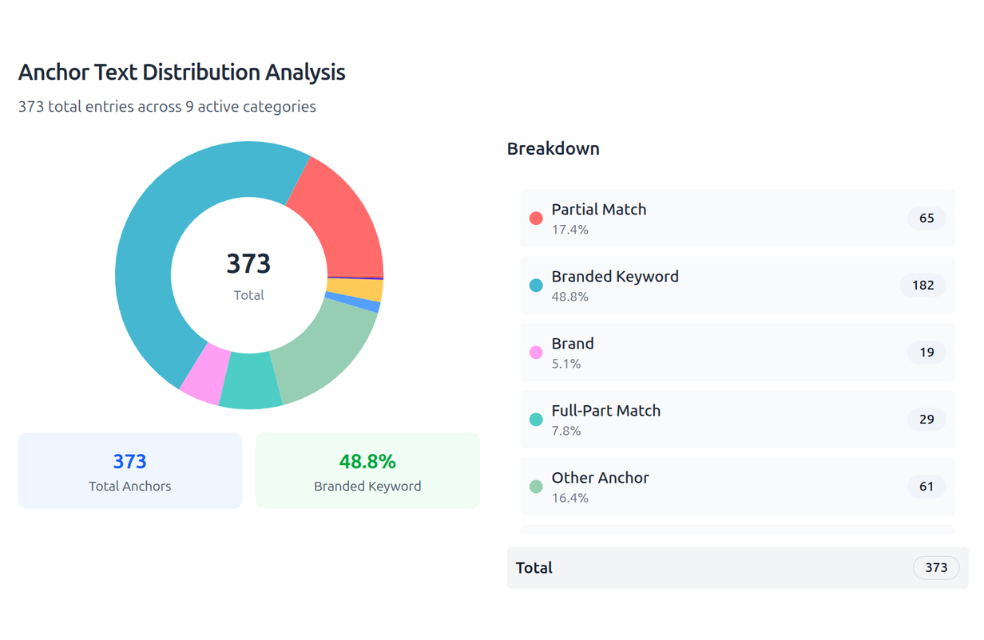
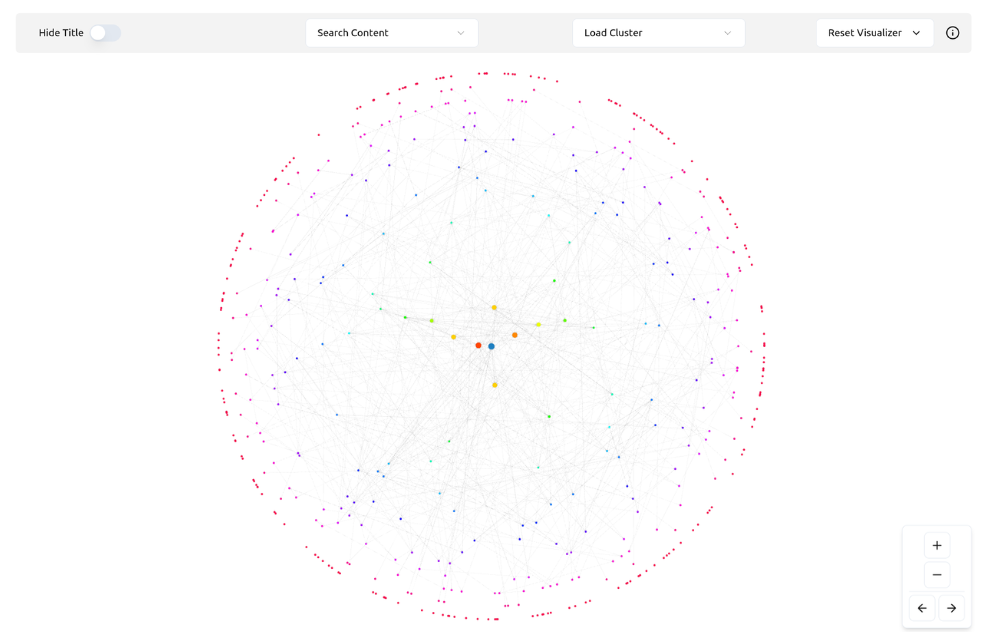
Interactive Site Visualizer
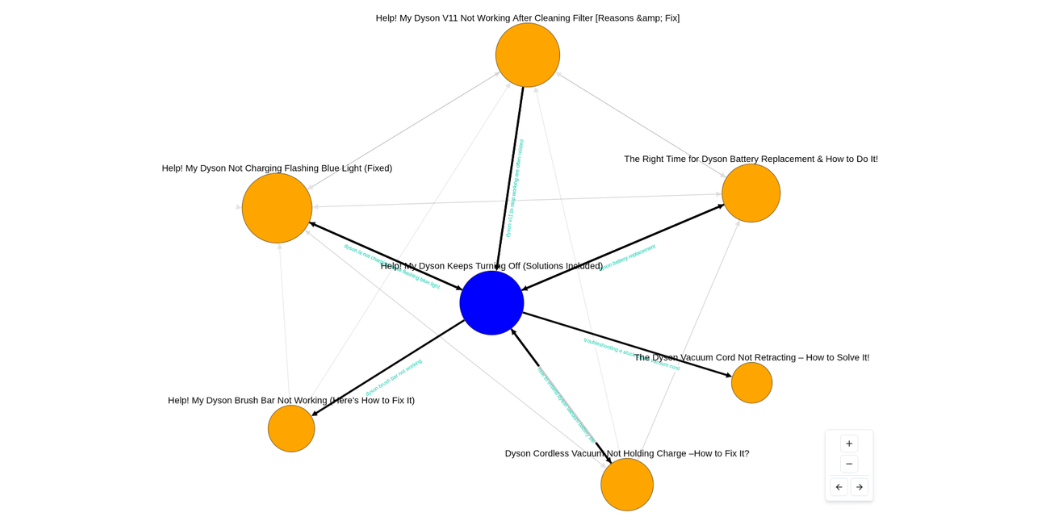
See your entire internal linking structure as an interactive network map.
- Full interactive network map of your site
- Spot isolated content clusters instantly
- Identify linking gaps and opportunities visually
GSC-Powered Analytics Dashboard
Track keywords, rankings, downtrending alerts — all completely free.
- Top performing keywords with impressions, clicks, position & CTR
- Week-over-week ranking movement tracking
- Downtrending page alerts
- Keyword cannibalization checker
Side-by-Side Feature Comparison
Everything that matters for safe, effective internal linking — compared directly.
| Capability | LinkBoss | Internal Link Juicer |
|---|---|---|
| Linking Method | Semantic AI analysis | Exact keyword matching |
| Automatic Link Insertion | Yes (AI-evaluated) | Yes (blind rules) |
| Semantic Understanding | Yes (NLP + ML) | ❌ No |
| Anchor Text Variation | Automated diversity | ❌ Exact match only |
| Context-Aware Placement | Yes | ❌ No |
| Entity Recognition | Yes (topical entities) | ❌ No |
| Penalty Risk Management | Automated protection | ❌ Manual only |
| Bulk AI Processing | 1,000 links/click | Keyword-based bulk |
| Silo Builder | 4 preset types | ❌ No |
| Anchor Text Tracking | Full distribution | ❌ No |
| Site Visualizer | Interactive map | ❌ No |
| GSC Analytics | Free dashboard | ❌ No |
| Multi-Site Management | Cloud dashboard | ❌ No |
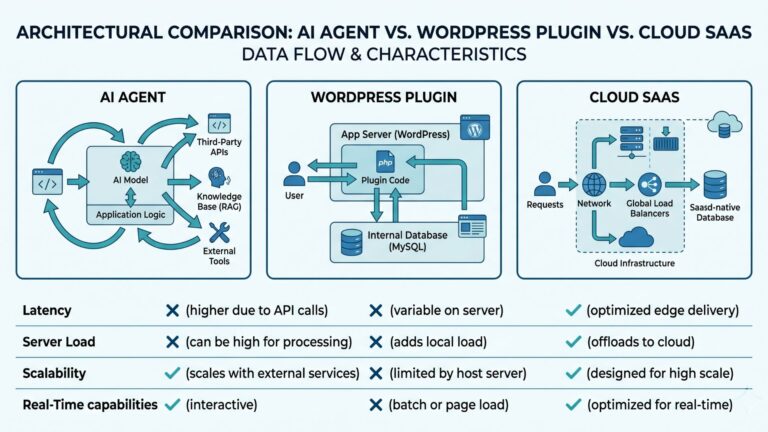
| Cloud Processing | Yes | Local WordPress server |
| Pricing | Free tier + $99/yr | Free / Pro available |
What You Get for $0 on LinkBoss
Most of LinkBoss is completely free. All auditing, analytics, silo building, and reporting features require no credits and no payment.
Site Health & Audit
- Site health score & full audit dashboard
- Orphan & dead-end page detection
- Link duplication & anchor cannibalization
- Anchor text distribution & link flow score
- HTTP/HTTPS audit & outbound domain tracking
- Full site structure visualization
GSC-Powered Analytics
- Top performing keywords (impressions, clicks, position, CTR)
- Week-over-week ranking movement tracking
- New keyword discovery & downtrending alerts
- Keyword cannibalization checker
Silo Building & Structure
- All silo preset types (Reverse, Priority, Serial, Hybrid Circle)
- One-click silo network builder
- Silo structure visualization
- Anchor text distribution management
Credits are only used for automatically inserting internal links into your content. You get 50 free credits on signup. No credit card required. ILJ gives you “free” automation that may cost you your rankings.
Up and Running in Under 5 Minutes
Install a lightweight WordPress plugin, connect it to your LinkBoss dashboard, and let AI analyze everything.
Install the Plugin
Go to Plugins → Add New, search for “LinkBoss”, and activate it.
Connect & Sync
Add your site in the dashboard, copy the API key, paste it in, and hit Sync Now.
Get Your Free Audit
Site health, orphan pages, anchor cannibalization — all at $0 cost with zero server impact.
Build Links & Grow
Silo builder, bulk interlinking, GSC analytics — all free with AI-protected anchor profiles.
Simple, Transparent Pricing
Most features are free. Credits only apply when auto-inserting links with AI quality control.
- Full site health audit & dashboard
- Orphan & dead-end page detection
- GSC-powered keyword analytics
- All silo builder tools & presets
- Site visualizer & anchor manager
- 2,400 credits for AI-protected linking
- WordPress + Shopify support
No credit card required
- Everything in Free
- 3 sites from one dashboard
- Bulk interlinking (up to 1,000 links)
- Silo builder with Boss Mode
- Smart anchor optimization
- Smart paragraph generator
- Links stay permanent
No credit card required
- Automatic link insertion
- Keyword-based rules
- Post type & taxonomy support
- Basic frequency controls
- ❌ No semantic understanding
- ❌ No anchor text variation
- ❌ No context evaluation
- ❌ No penalty risk management
- ❌ No silo builder
- ❌ No anchor text tracking
Free but risky at scale
Setting the Record Straight
Common myths about keyword automation — and the evidence against them.
“Automation is automation — ILJ and LinkBoss both automate linking”
“Internal linking doesn’t cause Google penalties anymore”
“ILJ is fine for small sites with few keyword rules”
“Context-aware linking isn’t necessary — Google just needs links”
Frequently Asked Questions
What is the fundamental difference between keyword matching and semantic AI?
How does exact-match link insertion trigger SEO penalties?
Can I use LinkBoss alongside SEO plugins like Yoast or Rank Math?
When is ILJ sufficient for my needs?
Is LinkBoss really free?
Automation Without Intelligence
Is a Liability.
7,000+ SEO professionals trust LinkBoss for AI-protected internal linking that builds authority instead of penalties. Audit your site, build silos, track rankings — all for $0. Start free today.