Internal Linking Strategies That Actually Move Rankings
Internal linking strategies distribute PageRank, consolidate topical authority, and guide crawlers through content clusters. The three frameworks covered here, hub-and-spoke models, authority-driven linking from high-equity pages, and the historical content refresh protocol, provide a systematic approach to building a compounding structural advantage over sites that link without strategy. According to Google’s SEO starter guide on internal linking, deliberate internal link structures help Google understand the relationship between pages and which pages on a site carry the most significance.
This guide covers the three strategies that produce the most measurable results: the hub-and-spoke model, authority-driven linking from high-equity assets, and the historical content refresh protocol that most teams skip entirely.

The Hub-and-Spoke Model
What It Is and Why It Works
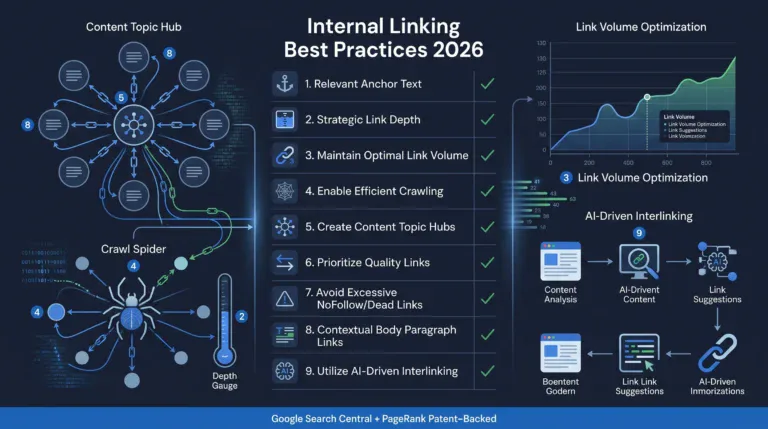
The hub-and-spoke model is the most widely proven content architecture strategy in SEO. Understanding what internal linking is is the prerequisite; the hub-and-spoke model is the strategic application. The concept is straightforward: one central hub page covers a broad topic authoritatively, and multiple spoke pages cover specific subtopics in depth.
The hub earns the broad-match rankings. The spokes capture long-tail and specific-intent queries. Together, they signal comprehensive topical coverage to search algorithms in a way that isolated articles never can. Ahrefs documented the effectiveness of this approach in their hub and spoke content model guide, showing that clustered content consistently outperforms standalone articles on the same topics.
The structural rule is non-negotiable: every spoke must link back to the hub, and the hub must link out to every spoke. Spokes should also link to each other where contextually relevant. This bidirectional linking creates a self-reinforcing semantic cluster where every page in the group strengthens the authority of every other page.
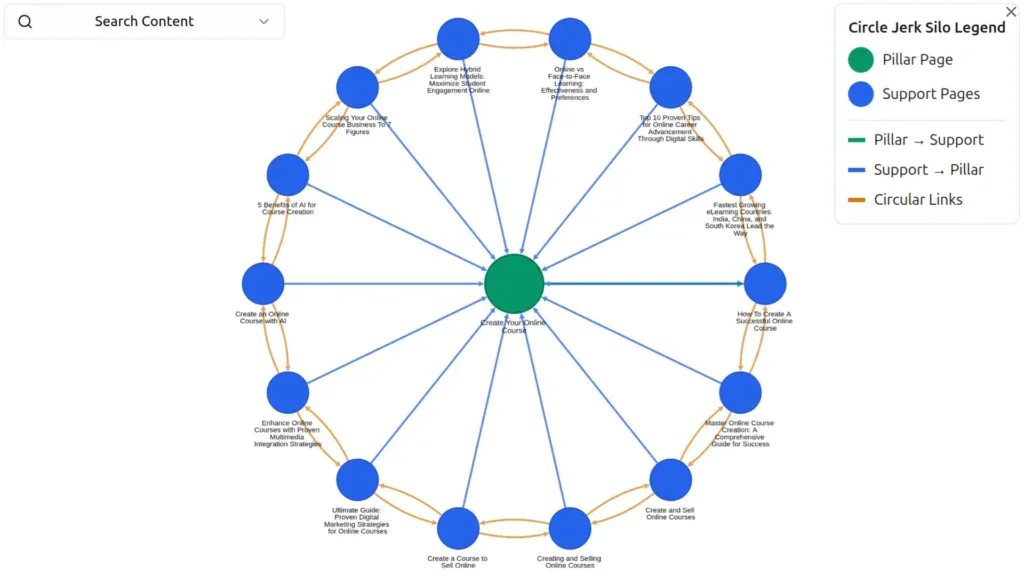
How to Build a Hub-and-Spoke Cluster
Step 1: Identify your hub topic. The hub should target a high-intent, broad keyword with significant search volume. It needs to be a topic you can cover comprehensively and around which you have, or plan to create, multiple supporting pieces.
Step 2: Map your spokes. List every subtopic, specific question, or related concept that falls under the hub’s umbrella. Each of these becomes a spoke article. Aim for topical exhaustiveness: the goal is for your cluster to cover the subject more completely than any competitor.
Step 3: Build the hub page first. The hub should be your most comprehensive piece on the topic. It doesn’t need to cover every subtopic in full depth; it needs to introduce each one clearly and link to the spoke that covers it in detail. Read the internal linking for SEO guide for a deeper technical treatment of how PageRank flows through these cluster structures.
Step 4: Publish spokes with hub links baked in. Every spoke should include a contextual link back to the hub, placed naturally in the body content. Don’t leave this as a retroactive task.
Step 5: Cross-link spokes to each other. As the cluster grows, identify spoke articles with genuine topical overlap and link between them. A reader going deep on one subtopic should have a clear pathway to adjacent subtopics without having to return to the hub first.
Cornerstone Content as the Hub Foundation
The hub page in a well-executed cluster functions as cornerstone content: the definitive, high-authority resource on the topic that all related content references back to. A cornerstone content should receive preferential treatment in internal linking to maximize their authority signal.
Cornerstone pages need to earn their status structurally. They should accumulate the most inbound internal links of any page in the cluster, have the highest word count and content depth, and target the broadest keyword in the topic group. Over time, the equity flowing through the cluster reinforces the cornerstone’s authority on every crawl.
Topic clusters built on this model are how content sites establish genuine topical authority rather than surface-level coverage. Search algorithms and AI-driven search models both interpret cluster coherence as a quality signal for the entire domain, not just individual pages.
Leveraging High-Authority Assets
Find Your Strongest Pages First
Before you can use your high-authority pages strategically, you need to know which pages they are. This requires backlink analysis rather than guesswork.
Pull your backlink profile in Ahrefs, Semrush, or a comparable tool. Sort by the number of referring domains pointing to each page. The pages at the top of that list are your high-equity assets: pages that have accumulated genuine external authority over time.
These pages are your most powerful internal linking real estate. A link from a heavily backlinked page passes significantly more equity than a link from a page with minimal external authority.
Pass Authority to New Content Strategically
Newly published content starts with zero external backlinks and minimal crawl priority. The fastest way to accelerate its indexation and early ranking trajectory is to link to it from a high-authority page. According to Google’s documentation on how Google uses links for crawling, links from authoritative pages signal crawl priority and topical relevance to Googlebot.
The process is mechanical: after publishing new content, identify your highest-authority pages that cover topically adjacent subjects. Add a contextual link from those pages to the new URL. This passes retained equity to the new page, signals to crawlers that the new content is topically connected to trusted existing material, and compresses the time between publication and meaningful search visibility.
This is one of the highest-leverage, lowest-effort tactics in SEO. Most teams either don’t do it systematically or only apply it to their most prominent new pieces rather than consistently across all new publications. Teams evaluating whether to automate this process should read the LinkBoss versus AIOSEO comparison to understand how automated linking tools handle authority-driven link insertion at scale.
Build a Keyword Map Before Linking
A keyword map is a document that pairs target keywords with destination pages across your entire site. It’s the pre-requisite for anchor text strategy at scale. Anchor text as a ranking signal is well-documented by Moz: consistent, descriptive anchor text helps search engines understand what the linked page is about and where it should rank.
Without a keyword map, anchor text decisions are made intuitively, post by post, which produces an inconsistent and often redundant anchor profile. With a keyword map, every anchor text decision is deliberate: you know which page each keyword variant should point to, and you don’t accidentally create competing anchor text signals for different pages.
Building a keyword map doesn’t require complex tooling. A spreadsheet with target keywords in one column and their assigned destination URLs in another is sufficient. The discipline is in maintaining and applying it consistently. Run your existing anchor profile through a dedicated anchor text cannibalization checker to identify where competing anchors may already be sending conflicting signals.
| Keyword Phrase | Assigned Destination URL |
|---|---|
| internal linking tool | linkboss.io (homepage) |
| bulk auto interlinking | /bulk-auto-interlinking-tool/ |
| silo builder | /semantic-silo-builder-for-internal-linking/ |
| internal linking for agencies | /internal-linking-for-agencies/ |
| internal linking best practices | /blog/internal-linking-best-practices/ |
The rule: once a keyword is assigned to a URL in the map, it should only link to that URL. No exceptions, or you create the cannibalization problem the map is designed to prevent.
Content Silos and Page Authority Distribution
Why Silo Architecture Matters
Content silos group related pages into clearly defined topical categories, with strict internal linking rules that keep equity flowing within each silo rather than bleeding across unrelated topics. As Moz explains in their guide to content silo architecture for SEO, this structured approach prevents topical dilution and helps search engines form clear associations between related pages.
A well-constructed silo ensures that link equity earned by any page in the group strengthens all pages in the group. A poorly constructed site, where links cross topics freely and without structure, diffuses that equity across unrelated content and dilutes the topical signal of every page.
For large sites covering multiple distinct topic areas, silos are the mechanism that lets each topic cluster build independent topical authority without interfering with others. Publishers managing extensive content libraries should review the internal linking for publishers guide for platform-specific silo implementation strategies.
Distributing Page Authority Intentionally
Page authority distribution is the deliberate practice of routing equity where it will have the most ranking impact. This means:
- Linking from high-authority pages to pages you want to rank higher
- Ensuring hub pages receive more inbound internal links than supporting spoke pages
- Avoiding links to low-value pages that consume equity without contributing to ranking goals
Most sites distribute page authority accidentally rather than intentionally. The equity goes wherever editors happen to link, rather than where the site’s ranking priorities dictate it should go. A silo-based architecture with a keyword map corrects this by making authority flow a structural decision rather than an editorial habit.
The Historical Content Refresh Protocol
Why Publishing Is Only Half the Work
Every article you publish creates linking opportunities in your existing archive. Older posts that cover related topics should link forward to the new content, and the new content should link back to relevant older posts. Content freshness is a documented content freshness ranking factor in Google’s evaluation criteria, and regular internal link updates are one of the strongest freshness signals a site can send.
Most teams handle the second half, linking from new content to existing posts, but skip the first. The older posts that should now point to the new article sit unchanged, unaware of the new content that’s relevant to their readers.
This creates a one-directional, static link graph. New content gets connected at publication but never benefits from the accumulated authority of the posts that preceded it.
How to Execute the Refresh
The historical content refresh protocol has three steps.
Step 1: Identify topically related older posts. After publishing new content, search your own site for existing posts that cover adjacent topics. These are the posts that should now link forward to the new article. A simple site search filtered by topic is usually sufficient.
Step 2: Add contextual forward links. Open each identified older post and add a natural contextual link to the new content. The link should fit within existing body text, not be appended awkwardly at the end. If the paragraph structure doesn’t support a natural insertion, it’s worth editing a sentence to accommodate it.
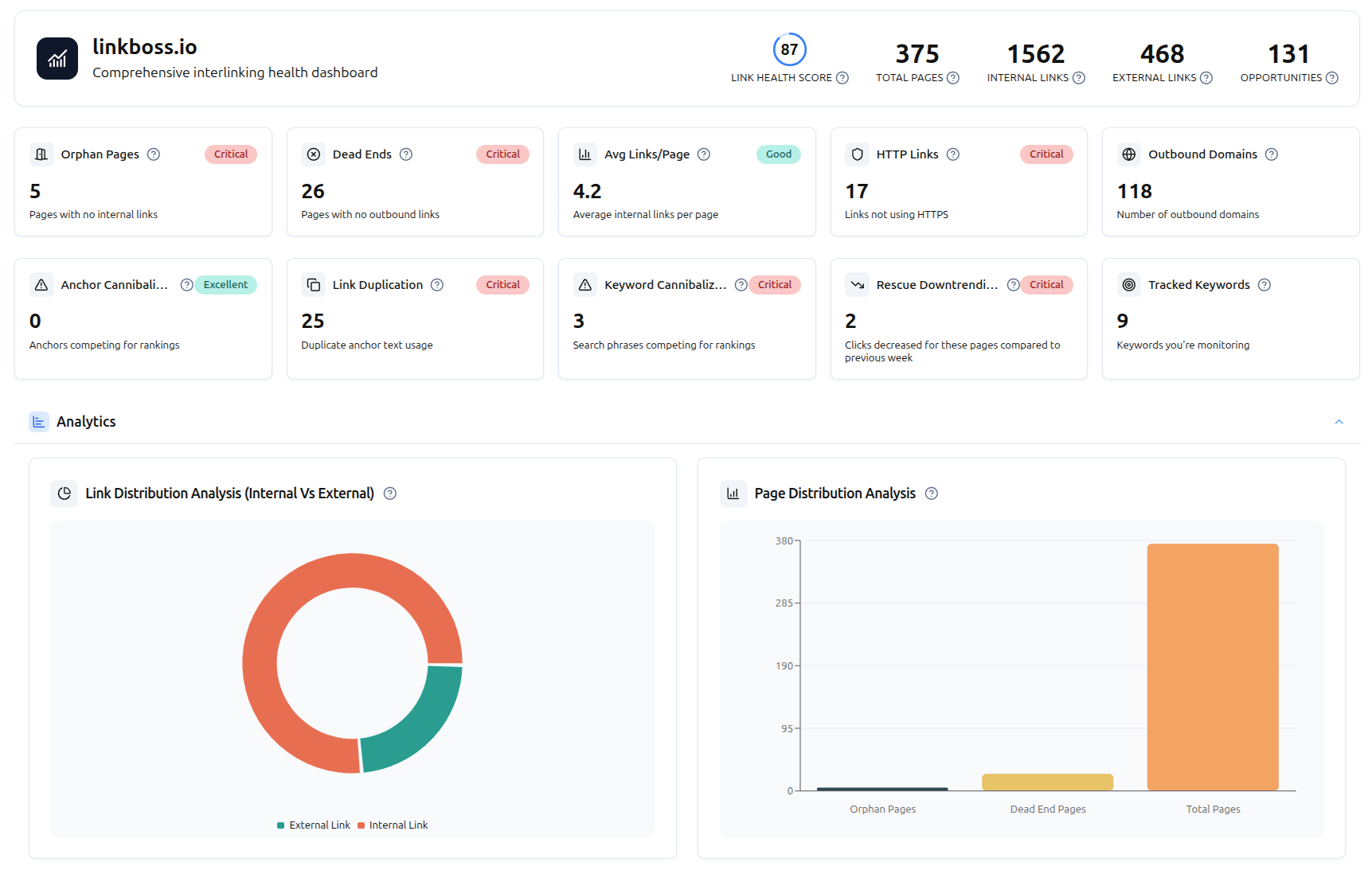
Step 3: Document and schedule regular refreshes. The refresh protocol works best as a systematic recurring process, not a one-time project. Build it into your publishing workflow so that every new publication triggers a backward audit of the archive for linking opportunities. Use an orphan page checker tool to identify pages that have lost their inbound links over time and are no longer receiving any internal equity flow.
For teams managing large archives, automating the identification step with a dedicated automated internal linking tool makes the refresh protocol operationally sustainable at scale. Manual identification across hundreds of posts quickly becomes the bottleneck that causes teams to skip it.
Putting the Strategies Together
These three strategies compound when applied together. The hub-and-spoke model provides the architectural skeleton. The authority-passing strategy accelerates new content’s entry into that skeleton. The historical refresh keeps the entire architecture current and prevents link decay as the archive grows.
For agencies managing this across multiple client sites, the operational complexity multiplies considerably. The internal linking for agencies page covers how centralized multi-site management changes the scalability equation for SEO teams operating across multiple domains.
For platform-specific implementation, including WordPress, Shopify, and other CMS environments, the Shopify internal linking setup guide demonstrates how these strategies adapt to different technical stacks. The principles remain the same regardless of platform; only the execution mechanics change.
LinkBoss handles the execution layer for all three strategies: bulk cluster linking, authority-driven link insertion, and archive refresh identification, through a single platform built specifically for this work. If you’re serious about internal linking as a systematic discipline rather than an occasional editorial task, the tooling investment pays for itself quickly.
Frequently Asked Questions
How does the hub-and-spoke model consolidate topical authority in search engines?
Search algorithms assess topical authority partly by evaluating how comprehensively a domain covers a subject and how coherently its content is interconnected. The hub-and-spoke model creates a cluster where every page reinforces every other page’s topical relevance through bidirectional linking. The hub accumulates equity from all spokes, the spokes borrow authority from the hub, and the entire cluster signals deep subject-matter coverage rather than scattered standalone articles.
What is reverse internal linking and why is it mandatory?
Reverse internal linking, or the historical refresh, is the practice of returning to older published content and adding forward links to newer related articles. It’s mandatory because newly published content starts with zero internal equity. Without reverse linking, new pages only receive links placed at publication and miss the accumulated authority of all the topically related posts that came before them. Over time, skipping this step produces a link graph where older content is structurally disconnected from newer content, weakening the entire archive’s coherence.
How do you accurately identify a website’s most authoritative pages to pass link equity?
Pull your backlink profile in a tool like Ahrefs or Semrush and sort pages by referring domain count. The pages with the most unique referring domains have accumulated the most external authority and are your highest-equity internal linking assets. Cross-reference that list with your keyword map to identify which high-authority pages are topically adjacent to the content you want to rank higher, then add deliberate contextual links from those pages to your target URLs. Run a free audit with u003ca href=u0022https://linkboss.io/free-tools/u0022u003eLinkBoss’s free internal linking audit toolsu003c/au003e to automate this identification process.