Internal Linking for Agencies: A Scalable System for Every Client
Internal linking for SEO agencies requires centralized multi-site management architecture to deliver scalable, profitable client services. Agencies managing 10 or more client domains face operational overhead that makes manual or plugin-based linking approaches economically unviable. LinkBoss provides cloud-based platforms with cross-domain analytics and API integration capabilities that reduce per-client linking maintenance time from 4-6 hours monthly to 30-60 minutes.
This guide provides a systematic framework for agency directors and enterprise SEO teams who need to build repeatable internal linking service lines across multi-client portfolios.
Enterprise-Scale Internal Linking Challenges for Multi-Client Agencies
Enterprise-scale internal linking challenges arise when agencies must manage linking architectures across multiple client domains with different CMS platforms, content structures, and publishing cadences. The core operational bottleneck is not time management. Centralized multi-site architecture solves what distributed plugin-based approaches cannot.
A typical agency portfolio includes diverse site architectures:
- One client with 800 blog posts
- Another with 300 product pages
- A news publication publishing 50+ articles weekly
- A SaaS blog with technical documentation
Each requires custom internal linking structures and ongoing maintenance as new content gets published.
The per-client workflow for manual management involves seven sequential steps:
- CMS login and authentication
- Existing link audit and mapping
- Orphaned content identification
- Link opportunity mapping
- Writer and editor briefing
- Revision review and approval
- Implementation and verification
A single client publishing 20 new posts monthly requires this cycle repeated continuously. Across 15 clients, this workflow consumes 60-90 hours monthly on internal linking alone. This often exceeds the retainer value.
Why WordPress Linking Plugins Fail for Agency-Scale Operations
Client-side WordPress linking plugins fail for agency portfolios because they create fragmented, unmanageable infrastructure across multiple domains. Each plugin installation operates with independent settings, keyword rules, update cycles, and failure modes. This prevents cross-domain visibility and efficient portfolio management. Research from Ahrefs on WordPress plugin performance at scale confirms that sites running 15-25 plugins experience measurable load time increases and conflict-driven instability.
The fundamental architectural problem: when linking tools run inside individual CMS installations, agencies lack any unified view of linking health across their portfolio. A plugin failure on one site goes unnoticed until the client reports it. Three clients experiencing orphaned content spikes simultaneously remain invisible without cross-domain analytics.
Plugin conflicts compound the problem. Client sites accumulating 15-25 plugins over time experience conflicts between linking tools, caching systems, and page builders. Diagnosing unpredictable behavior across multiple client environments consumes hours of margin-eroding support time.
Centralized Multi-Site Management Reduces Agency Overhead
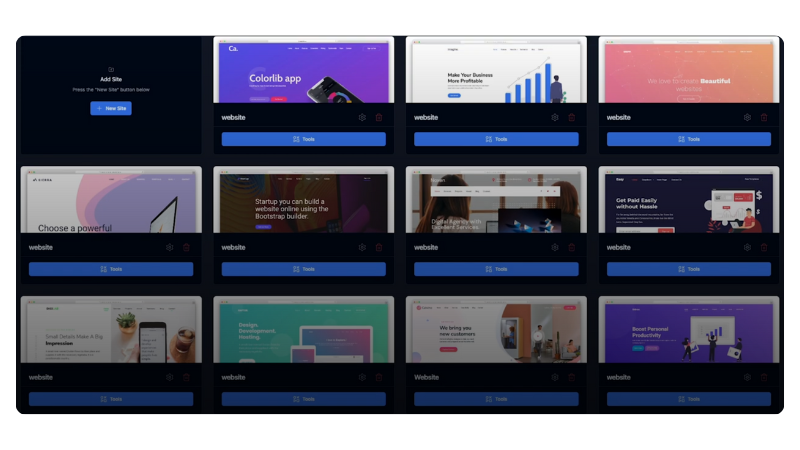
Centralized multi-site management is an operational model where all client domains connect to a single cloud-based platform rather than individual CMS backends. This architecture enables agencies to view linking health, deploy bulk operations, and maintain consistency across entire portfolios from one interface.
LinkBoss implements this multi-site architecture by connecting each client domain independently to the platform while providing unified dashboard management. Agencies can execute bulk auto interlinking across one client’s 500-post content library without server access, then immediately switch to another client for identical operations. The platform uses semantic AI with vector embeddings to ensure every link is contextually relevant, not just keyword-matched.
The operational efficiency gain is quantifiable. Tasks requiring individual CMS logins, plugin configuration, and manual suggestion review now execute at platform level. LinkBoss contextual semantic interlinking deploys complete internal linking passes across hundreds of posts in the time previously required for single-article manual linking.
Cross-Domain Analytics Reveals Portfolio-Wide Link Patterns Invisible to Single-Site Views
Cross-domain analytics provides competitive advantage by revealing portfolio-wide patterns invisible when viewing sites individually. The LinkBoss unified dashboard monitors orphan pages, dead ends, duplicate links, and keyword cannibalization across all connected sites. Agencies can identify industry-specific linking problems, benchmark CMS performance differences, and make data-driven pricing decisions based on actual operational metrics.
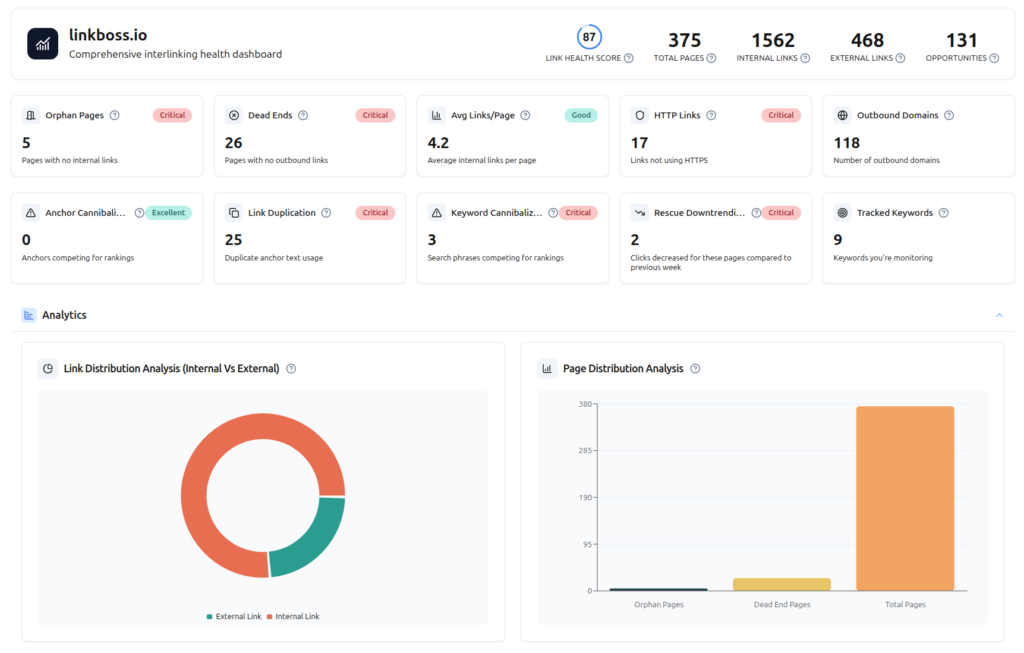
Specific patterns that emerge from cross-domain visibility:
- Ecommerce clients show 40-60% higher orphan page rates than B2B SaaS clients, indicating content architecture problems common to product-heavy sites
- Sites using WordPress with Gutenberg demonstrate better anchor text distribution than classic editor installations, suggesting workflow optimization opportunities
- News publications require more frequent linking passes due to higher content velocity
This portfolio-level data transforms service pricing from estimation to benchmarking. Agencies can measure actual time requirements across similar accounts:
| Site Type | Content Volume | Monthly Maintenance Time |
|---|---|---|
| Ecommerce | 500 pages | 45 minutes |
| B2B Blog | 200 pages | 20 minutes |
| News Publication | 1,000+ pages | 60-90 minutes |
Entity-Based SEO Drives Internal Linking Relevance at Scale
Entity-based SEO for internal linking is a semantic approach that maps conceptual relationships between topics and pages rather than matching keyword strings to target URLs. Entity-based linking identifies which pages establish topical authority on specific subject matter and builds architectures reinforcing those authority signals across entire sites. Google’s entity recognition systems, documented in patents on entity-based search optimization, evaluate semantic relationships between concepts rather than keyword frequency alone.
Traditional keyword-level linking tools match search terms to URLs and insert links. This approach is adequate for basic SEO hygiene but insufficient for building topical authority. Search engines evaluate semantic relationships between concepts, not keyword frequency. A site comprehensively covering entities, subtopics, and conceptual relationships within a subject area ranks higher than sites targeting individual keywords.
LinkBoss approaches entity-based analysis through semantic clustering using NLP (Natural Language Processing) and vector embeddings. The platform reads content at paragraph level, identifies topical entities each post covers, and builds link architectures grouping semantically related content into mutually reinforcing clusters. Unlike basic plugins that blindly match keywords, LinkBoss understands meaning and ensures contextually relevant connections.
The Silo Builder Automates Topic Cluster Architecture for Client Sites
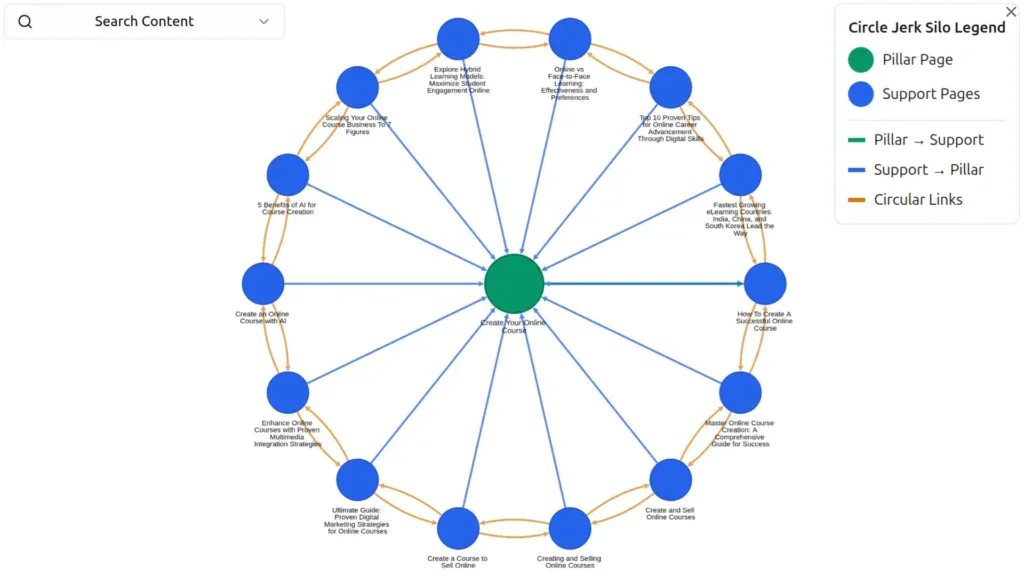
The LinkBoss Silo Builder supports topic clustering by enabling agencies to create hub-and-spoke or reverse silo structures that group semantically related content. This visual approach allows SEO strategists to see link patterns, identify content gaps, and plan strategic improvements across client portfolios.
Key capabilities for agency workflows:
- Visual SILO mapping to verify structure before deployment
- Smart content clustering to group related content automatically
- Orphan page identification within each cluster
- One-click bulk deployment across hundreds of posts
API Integration Streamlines Monthly Client Reporting with Direct Data Feeds
API integration enables automated client reporting by connecting LinkBoss platform data directly to agency reporting infrastructure. Compatible platforms include Google Sheets dashboards, HubSpot CRM, and custom client portals. This integration transforms internal linking from invisible background work into documented, quantifiable deliverables.
The integration workflow involves three components:
- Scheduled audits at defined frequencies (weekly or monthly)
- Delta report generation showing changes in orphaned content counts and anchor text distribution ratios
- Metric push to client-facing report templates including crawl depth improvements and pages per session changes
Clients viewing month-over-month improvements in specific metrics understand service value without explanation. Examples include orphaned content reduced from 23% to 8% and average crawl depth improved from 4.2 to 2.8 clicks. Agencies with automated reporting spend 75% less time justifying retainers and experience lower churn on long-term engagements.
LinkBoss Tracks Link Growth, Crawl Coverage, and Topical Authority for ROI Reporting
LinkBoss tracks four measurable metrics through the Link Health Monitor that prove internal linking ROI to clients:
| Metric | Definition | Target Improvement |
|---|---|---|
| Orphaned Content Reduction | Percentage of pages with zero internal links | Reduce to under 10% |
| Crawl Depth Improvement | Average clicks from homepage to content | Reduce to under 3 clicks |
| Link Flow Score | Distribution of link equity across pages | Balance across money pages |
| Anchor Text Distribution | Variety and relevance of anchor text | Exact-match under 15% |
Concrete reporting example: “This month’s linking work reduced orphaned content from 47 pages to 12 pages, improved average crawl depth from 3.4 to 2.1 clicks, and contributed to 15 target keywords moving from page 2 to page 1 positions.” These specific, verifiable numbers replace vague value statements with documented deliverables.
Building Scalable Internal Linking Services for Agency Clients
Agencies build scalable internal linking services through three systematic components:
- Defined onboarding workflows for new client sites
- Monthly maintenance protocols with automated monitoring
- Reporting frameworks making value visible
This systematic approach separates profitable linking services from margin-draining manual work. Agencies that prefer to outsource internal linking entirely can leverage LinkBoss’s done-for-you interlinking service to deliver client results without building in-house capabilities.
The Agency Onboarding Workflow Covers Full Site Audit, Architecture Buildout, and Bulk Link Deployment
The client onboarding workflow for internal linking consists of three sequential phases:
Phase 1: Full Site Audit
Connect the client site to LinkBoss and use the Site Visualizer to map existing link structure. Identify orphaned content (pages with zero internal inbound links), visualize topic clusters, and assess anchor text distribution across target pages. This audit establishes baseline metrics against which all future progress is measured and identifies immediate quick wins demonstrating early engagement value.
Phase 2: Architecture Buildout
Use the Silo Builder to create semantic cluster structure aligned with client’s target keyword priorities. Set semantic thresholds to control link relevance scores. This phase requires strategic input from the SEO team but leverages platform semantic analysis to identify clustering opportunities requiring hours to surface manually.
Phase 3: Bulk Link Deployment
Review the visual SILO map to verify structure, then populate the architecture across existing content library with one-click bulk deployment. LinkBoss can create 1,000+ semantic connections in minutes. This immediately demonstrates scale advantage over plugin-based approaches requiring individual post editing.
Monthly Maintenance Protocols Include Link Health Audits, New Content Integration, and Performance Reporting
Monthly maintenance protocols cover three ongoing requirements:
- Linking new content published since last pass
- Monitoring and fixing broken links
- Correcting anchor text distribution drift
LinkBoss with automated monitoring enables one SEO strategist to maintain linking for 5-6 clients in the time previously required for one.
Automated monitoring responsibilities include:
- Automatically flagging new orphan pages as content publishes
- Identifying broken links and dead ends as they occur
- Alerting when anchor text patterns drift outside acceptable parameters (exact-match anchors exceeding 15% of total)
- Tracking duplicate links and keyword cannibalization risks
Proactive monitoring means issues are addressed before clients notice them.
LinkBoss Provides Bulk Interlinking, Semantic Analysis, Silo Building, and API Access for Agencies
LinkBoss provides agency-specific features that support portfolio-wide internal linking operations:
| Feature | Agency Benefit |
|---|---|
| Multi-Site Dashboard | Manage all client sites from one interface |
| Semantic AI Engine | Contextually relevant links, not keyword spam |
| Bulk Auto Interlinking | 1,000+ links deployed in minutes |
| Site Visualizer | Visual maps for client presentations |
| Link Health Monitor | Automated issue detection and alerts |
| Smart Anchor Optimizer | Automated anchor text distribution |
| SaaS-Based Platform | No plugin conflicts or server access needed |
See the LinkBoss vs AIOSEO comparison for detailed breakdowns of how LinkBoss outperforms WordPress plugins for agency-specific requirements.
Internal Linking Automation Protects Agency Profit Margins
Automation protects agency margins by shifting team time from execution labor to strategy and quality control while LinkBoss handles semantic analysis, link suggestion generation, and bulk deployment. According to industry operational studies, SEO teams often spend the majority of their billable capacity on routine maintenance and “hygiene” tasks that can be systematized to reclaim time for high-value strategy.
A mid-market client with 500 content pages requiring ongoing linking work illustrates the economics:
| Approach | Per-Client Time | 15-Client Portfolio |
|---|---|---|
| Manual Management | 4-6 hours monthly | 60-90 hours monthly |
| LinkBoss Platform | 30-60 minutes monthly | 7.5-15 hours monthly |
| Time Savings | 85-90% reduction | 75+ hours saved |
Across a 15-client portfolio, this efficiency gain transforms 60-90 hours of monthly labor into 7.5-15 hours. This converts a time sink into a profitable service line.
The agencies winning in current markets identify which SEO deliverables can be systematized and build service models around that efficiency. Internal linking, with its combination of high SEO impact and traditionally high labor requirements, represents one of the strongest opportunities for this operational transformation. Proper crawl budget optimization ensures that the link structures agencies build are fully discovered and indexed by Google.
Frequently Asked Questions About Agency Internal Linking
Cloud-Based Multi-Site Management Eliminates Per-Client Plugin Configuration
Multi-site cloud management tools reduce agency operational overhead by eliminating context switching between individual CMS environments. Every CMS login/logout cycle carries cognitive and logistical overhead cost. Across 15 clients, this multiplies to hours of lost productive time weekly. Unified cloud dashboards like LinkBoss remove this entirely. All client sites are visible and manageable from one interface. Bulk operations execute tasks requiring individual post-by-post CMS attention across hundreds of posts simultaneously at platform level. This architecture fundamentally changes internal linking service economics from labor-intensive to system-driven.
Entity-Based SEO Ensures Topic Clusters Are Semantically Connected and Authoritative
Entity-based SEO is critical for enterprise topic cluster generation because search engines evaluate semantic entity relationships, not keyword frequency. Google’s topical authority assessment examines whether sites comprehensively cover entities, subtopics, and conceptual relationships within subject areas. Keyword-based topic clusters create shallow authority signals. Entity-relationship clusters create deep, interconnected topical coverage driving sustained ranking performance on competitive queries. For enterprise clients with 500+ page content libraries, entity-based cluster architecture determines whether sites rank broadly across topics or only for explicitly targeted terms.
Automated Link Auditing Generates Reportable Metrics Directly From Client Site Data
Automated link auditing integrates into client reporting workflows through API connections pushing linking metrics directly to agency reporting infrastructure. Compatible platforms include Google Sheets dashboards, HubSpot CRM, and custom client portals. The integration workflow involves three steps: (1) scheduling automated audit runs at defined frequencies, (2) generating delta reports showing changes in orphaned content counts, anchor text distribution ratios, and crawl depth metrics, and (3) pushing metrics to client-facing report templates. This transforms internal linking from invisible background service into documented, quantifiable deliverables. Clients seeing month-over-month improvements understand retainer value, directly reducing churn on long-term engagements.
LinkBoss Replaces Plugin-Per-Site Models With Centralized Agency Management
LinkBoss differs from WordPress linking plugins in three critical ways for agencies. First, it is SaaS-based with no plugin installation required, eliminating conflicts and server access needs. Second, it provides multi-site dashboard management where all client sites are controlled from one interface. Third, it uses semantic AI with vector embeddings to ensure contextually relevant links rather than blind keyword matching. These differences enable agencies to manage 15+ client portfolios in the time previously required for 2-3 clients manually.
Internal linking represents one of the highest-leverage SEO services agencies can offer when the operational model supports scalability. Site-by-site management with individual plugins is not a scalable business model. Centralized management through LinkBoss transforms internal linking from margin drain into repeatable, profitable service lines with semantic AI, bulk automation, and unified multi-site dashboards designed for agency operations.