LinkBoss vs Rank Math: The Internal Linking Gap No One Talks About
Rank Math has earned its reputation as one of the most capable free SEO plugins for WordPress.
Its analytics dashboard is thorough, its schema tools are solid, and its Google Search Console integration gives site owners data access most free plugins can’t match.
The gap shows up when you look at internal linking specifically. Rank Math’s approach works for small sites and breaks down systematically as complexity grows. Here’s exactly where, and why it matters.
What Rank Math’s Internal Linking Actually Does
Rank Math’s linking system is built around a feature called Pillar Content. Administrators manually tag specific posts as pillar pages, and the plugin prioritizes those in its real-time link suggestions while you’re editing.
The suggestions appear in the editor as you write. You review them, accept or reject each one, and insert the link. For a small blog with a consistent editorial team, this is a useful workflow enhancement.
The system relies entirely on manual input at every stage. Someone has to tag the pillars, keep those tags current, and insert every link post by post.
The Pillar Content Model Has a Ceiling
Pillar content identification through manual tagging is a starting point, not a scalable strategy. As your catalog grows, the tagging system needs constant maintenance to stay accurate.
More critically, Rank Math has no awareness of your link graph as a whole. It can’t tell you which posts are under-linked, where link equity is pooling, or whether your anchor text distribution is creating over-optimization risk.
It surfaces suggestions for the post you’re currently editing. Everything else is invisible to it.
Lexical Matching vs. Semantic AI (NLP)
The most significant technological gap between Rank Math and LinkBoss is how they actually “read” your content.
Rank Math: Lexical (Keyword) Matching
Because Rank Math relies on your defined “Focus Keywords” or “Titles” to suggest links, it uses basic lexical matching. If your Pillar Post is about “Credit Cards,” it looks for the exact phrase “credit cards” in your new article.
- The Flaw: It lacks context. It cannot distinguish between a “Credit Card Application” and “Credit Card Debt.” It simply sees the matching word and suggests a link, often resulting in irrelevant connections that confuse search engine crawlers.
LinkBoss: Semantic Artificial Intelligence
LinkBoss operates on a completely different technological plane. It leverages Natural Language Processing (NLP) and Machine Learning (ML) to analyze the meaning of your entire website.
- The Advantage: LinkBoss understands Entities. It recognizes that a paragraph discussing “Annual Percentage Rates (APR)” is semantically related to your Pillar Post about “Credit Cards,” even if the exact keyword is never mentioned.
- Context Generation: If Rank Math suggests a link, you have to shoehorn it into your existing text. LinkBoss features a Smart Link Generator that uses AI to write a brand new, contextually flawless sentence to house the anchor text naturally.
No Bulk Linking. At All.
This is the central limitation: there is no bulk processing capability in Rank Math’s internal linking ecosystem.
Every link on your site was placed by a human, one post at a time. There’s no operation that connects your newest 50 articles to relevant existing content simultaneously. No mechanism that retroactively updates old posts when new related content is published.
On a 500-post site, this is manageable with effort. On a 2,000-post site, you’re operating with a link graph that reflects historical editorial decisions rather than any coherent current strategy. The backlog of unaddressed linking opportunities compounds faster than any manual process can clear it.
For agencies managing multiple client domains, the bulk linking limitations don’t just hurt efficiency. They make systematic link coverage structurally impossible without labor that kills project margins.
How a Specialized Platform Approaches It Differently
A dedicated interlinking platform inverts the workflow. Instead of asking “what should this post link to?”, the question becomes “what does my content hierarchy require, and how do I execute it across the whole domain?”
You define your topic clusters and hierarchical relationships once. The platform processes every applicable post simultaneously, inserting contextually relevant links that reflect the architecture you’ve defined.
Semantic AI handles the contextual relevance matching. The model reads the surrounding paragraph before placing any link, so bulk processing doesn’t produce robotic or forced anchor text. Pillar content identification happens automatically based on content signals, without requiring manual tagging.
What the Numbers Look Like in Practice
| Capability | Rank Math | LinkBoss |
|---|---|---|
| Internal link suggestions | Yes (in-editor, real-time) | Yes (AI-generated, bulk) |
| Pillar content identification | Manual tagging | Automated |
| Bulk link generation | No | Yes |
| Anchor text diversity management | No | Yes |
| Domain-wide link architecture view | No | Yes |
| SILO / topic cluster support | No | Yes |
| Cloud-based processing | No | Yes |
| Multi-site management | No | Yes |
| Google Search Console integration | Yes | No |
Where Rank Math Still Wins
Rank Math’s Google Search Console integration is genuinely strong. Its analytics and rank tracking are among the best available at any price tier in the WordPress plugin space.
These are real capabilities worth having. They just operate at a different layer of SEO than internal link architecture, and strong analytics don’t compensate for a linking workflow that can’t scale.
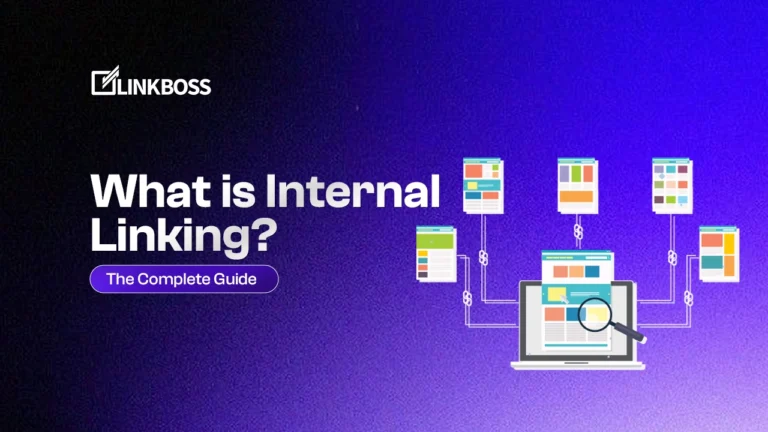
If you want to understand how internal linking functions mechanically within crawl budget and PageRank distribution, the what is internal linking guide covers the structural fundamentals before you commit to any tool.
Making the Call
The honest diagnostic question is: how was your current link graph built? If the answer is “through individual editor decisions made post by post without a defined strategy,” you already know the ceiling you’re working against.
Rank Math’s pillar content model is better than nothing and adequate for modest-scale operations. For large sites, agencies, and publishers, the bulk linking limitations make it the wrong tool for the job regardless of how well it handles everything else.
LinkBoss is built specifically for internal link architecture at scale, with automated bulk processing, AI semantic matching, and domain-wide visibility that generalist plugins aren’t designed to provide. If internal linking is a priority in your SEO operation, it’s worth using the best internal linking tool purpose-built for that problem.
Frequently Asked Questions
How does Rank Math’s algorithm prioritize internal link suggestions?
Rank Math prioritizes pages manually designated as Pillar Content, making them more likely to appear as suggested link targets when editing related posts. Beyond that designation, it assesses contextual relevance through shared terminology. It has no awareness of domain-wide anchor text distribution or which pages are architecturally under-linked.
What are the hidden operational costs of manual one-by-one link insertion?
The bigger issue beyond time is coverage. On any large site, a significant percentage of valid linking opportunities never get acted on because no editor opens the relevant posts. The link graph ends up reflecting editorial availability rather than content strategy, and it degrades as new content is published without retroactive updates to existing posts.
Why do specialized internal linking tools offer better suggestion quality than generalist plugins?
Generalist plugins spread development resources across meta optimization, schema, sitemaps, and linking all at once. Specialized tools concentrate everything on one problem, which produces more sophisticated matching models and cloud-based processing not constrained by WordPress server resources. Anchor text management also operates across the whole domain rather than one post at a time.